6 October 2026 | 6 min read
People Pen Desk
Kolkata knows how to celebrate Durga Puja. Every year, the city changes its face. Streets glow through the night, neighbourhoods become open-air galleries, old homes welcome visitors and the sound of the dhak travels from one para to another.
But Puja 2026 will feel a little different.
This year, some of the changes are coming from the government, while others are emerging from individual Puja committees. There will be no early pandal openings before Mahalaya. DJs will not be allowed. Maha Ashtami will be a dry day. The familiar cranes at immersion ghats are being taken out of the picture. Small Puja committees will get financial help, while electricity and fire licence charges are being waived for eligible organisers.
At the same time, Kolkata is getting some new sights. Allen Park, a place better known for Christmas lights and Park Street celebrations, will host Durga Puja for the first time. And instead of the familiar post-Puja carnival on Red Road, the government is putting its big public spotlight on Mahalaya at Eden Gardens.
Some changes may be noticed immediately. Others will become clear only when the city starts walking, eating, praying and pandal-hopping.
Here is what makes Durga Puja 2026 different.
1. The Puja pandals will have to wait for Mahalaya
For many Kolkata residents, the Puja begins well before Shashthi.
In recent years, some of the biggest pandals opened days before the actual Puja, giving pandal-hoppers an early start. That will not happen officially this year.
The government has directed Puja committees not to inaugurate their pandals before Mahalaya, which falls on October 10 in 2026.
That means the familiar sight of people visiting major pandals even before Mahalaya will be missing this year.
For ordinary visitors, it is a simple change: the city will have to wait a little longer before the Puja officially opens its doors.
And perhaps that means Mahalaya morning will feel a little more like the beginning of Puja again.
2. No cranes at the immersion ghats
At the other end of the festival, another old practice is changing.
The government has decided that cranes will not be used for Durga idol immersion this year.
For nearly three decades, cranes have been used at major Kolkata ghats to lift idols from the water after immersion.
The Kolkata Municipal Corporation is now looking at alternatives, including water jets, manual handling and even conveyor belts.
The decision is being presented as an attempt to bring greater traditional sanctity to the farewell of the Goddess.
But there is also a very practical question: how will Kolkata safely handle some of the city’s biggest idols without cranes?
That is one answer the immersion days of 2026 will have to provide.
3. Fire licence fees are being waived
Organising a Puja is not cheap.
Even a neighbourhood committee has to deal with permissions, electricity, safety arrangements, decoration and a long list of other expenses.
This year, small and low-budget Puja committees will get a waiver of fire licence fees.
The government has included the waiver as part of a wider package of support for smaller Puja organisers.
For a large corporate-style Puja, such savings may not change much.
For a small neighbourhood Puja, however, every saved rupee can mean one more light, one more cultural programme or simply less pressure on the organisers.
4. Electricity will cost Puja committees nothing
Another major relief this year concerns electricity.
The government has asked both CESC (Calcutta Electric Supply Corporation) and WBSEDCL (West Bengal State Electricity Distribution Company Limited) to provide electricity to Puja committees without charge, compared with an 80 per cent concession last year.
CESC has agreed to follow the directive, according to reports.
For Kolkata’s Puja organisers, this is a significant change because lighting is one of the most visible and expensive parts of the festival.
Think of the thousands of bulbs, decorative lights and electrical installations that keep the city glowing through the Puja nights.
This year, eligible committees will not have to carry that electricity bill in the same way.
5. The ₹1 lakh grant is meant mainly for smaller Pujas
The government has announced financial assistance of ₹1 lakh for smaller and low-budget Puja committees.
This is different from last year’s arrangement.
In 2025, around 45,000 registered clubs and Puja committees received ₹1.10 lakh each, according to reports.
This year, the Chief Minister has appealed to large and financially strong Puja committees to stay away from the grant so that the money can help committees that actually need it.
Several major Pujas have already decided not to take the assistance.
So the important story is not simply that there is a ₹1 lakh grant.
It is that the government wants the money to reach the smaller Puja.
6. No DJ. The dhak gets the stage
Walk through Kolkata during Puja and you will hear many things.
This year, one familiar sound will be missing.
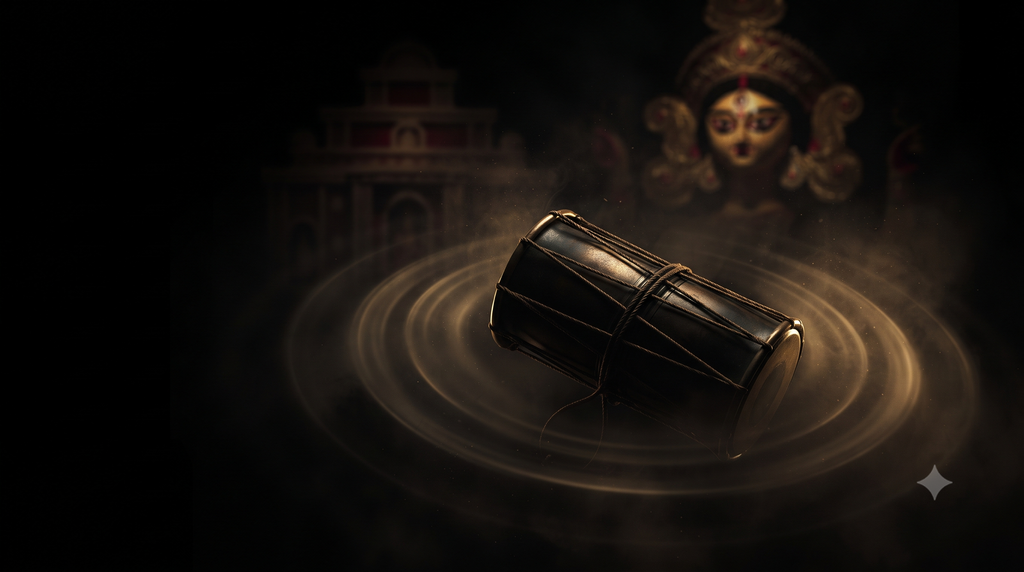
The government has announced a complete ban on DJ music during Puja celebrations and immersion processions.
That could make the sound of the dhak much more prominent in the city’s Puja celebrations.
For many Bengalis, the dhak is not simply music.
It is one of the sounds that tells the city that Maa Durga has arrived.
7. A theme with a boundary
Theme pujas are not going away in Kolkata in 2026. But the government wants organisers to think twice before turning the pandal into something so experimental that it moves away from the cultural and religious character of Durga Puja.
At the Puja coordination meeting, Chief Minister Suvendu Adhikari asked committees to ensure that their idols, pandals and themes do not hurt religious sentiments or undermine Bengal’s cultural heritage. Theme-based pujas, however, remain allowed.
The message is therefore not “no themes”, but theme with responsibility.
For Kolkata, this is an interesting line to draw. Theme pujas have become one of the biggest attractions of the city’s Puja, with artists using everything from folk art and disappearing traditions to contemporary social issues. The government now wants that creativity to remain connected to the cultural and religious character of the festival.
8. No Red Road Carnival, but Mahalaya gets a new grand stage
This is one change that deserves to be mentioned only once because it is part of a larger shift in the government’s Puja calendar.
The annual Durga Puja Carnival on Red Road will not be held in its familiar post-Dashami form this year.
Instead, the government is putting the spotlight on Mahalaya with a major programme at Eden Gardens.
The programme is expected to combine traditional performances, dhakis and large-scale visual elements, including drone and projection shows.
The change is interesting because the focus is moving from the grand farewell after Puja to a grand public welcome at its beginning.
In other words, Kolkata’s big public Puja spectacle is moving closer to Mahalaya.
9. A 56-year-old Puja gets a fresh lease of life from the High Court
Sometimes a Puja is more than a festival.
It is a piece of neighbourhood memory.
The Calcutta High Court has allowed the Madan Mohan Krishti Parishad to hold its Durga Puja at a disputed Kolkata property this year.
The Puja has been held at the premises for 56 years.
The court’s order did not settle the ownership dispute over the property, but it directed the police to allow the society to conduct this year’s Puja.
For the people associated with the Puja, that means something very simple.
A tradition that has continued for 56 years will not have to stop this year because of a property dispute.
10. Allen Park, the Christmas landmark, welcomes Durga Puja for the first time
Perhaps the most unusual new Puja story this year comes from Park Street.
Allen Park, long associated with Kolkata’s Christmas celebrations, will host a Durga Puja for the first time in 2026.
The Puja is being organised by Kolkata Sanatani Sangha.
The organisers have planned a traditional-style idol along with a pandal based on the theme of Tandav.
The Puja will also include cultural programmes, an Ashtami-night jagrata and Nabadurga Puja on Nabami.
For generations, Allen Park has been part of Kolkata’s Christmas imagination.
This year, the same space will carry the colours, rituals and sounds of Durga Puja.
A Puja that is changing, without losing its old sounds
Durga Puja has never been a festival frozen in time.
It has changed with Kolkata.
The zamindar’s household gave way to the neighbourhood barowari Puja. The traditional pandal made room for the theme pandal. Local celebrations became a global cultural attraction.
And now 2026 is bringing another set of changes.
Some are about rules. Some are about money. Some are about tradition. Some are simply new chapters in the city’s Puja map.
The pandals will wait for Mahalaya.
The DJs will be silent.
The dhak will continue.
The cranes will stay away from the ghats.
Ashtami will be dry.
Small Puja committees will get more financial support.
And in Allen Park, a space known for Christmas will hear the sound of Durga Puja for the first time.
That is perhaps the best way to understand Kolkata’s Puja.
It changes every year.
But somehow, when the dhak begins, it still feels like the same old city waiting for Maa Durga.