
5 October 2026 | 50 min read
People Pen Desk
When the first dhaak begins to roll through Kolkata, the city changes.
The smell of shiuli flowers mixes with incense. Old balconies fill with light. White clouds float across an autumn sky, and the first kaash flowers nod in the breeze. Somewhere in a narrow lane, a conch shell breaks the morning silence. And behind an old wooden door, another Durga Puja begins.
These are not pandals built for a few days. These are homes.
Inside Kolkata’s old neighbourhoods, Durga arrives year after year in courtyards that have witnessed births, deaths, weddings, departures and generations growing old. The walls have seen the city change around them. The lanes have changed names, houses have changed hands and Kolkata has grown far beyond the city its ancestors knew. Yet, when autumn comes, many of these houses still open their doors to the same Goddess.
This is the world of Bonedi Bari Durga Puja. Many of these households say they have kept the festival going even though the zamindari system ended after independence and family fortunes shrank.
Some of these Pujas began more than four centuries ago; the Sabarna Roy Chowdhury family’s Aatchala Puja traces itself to 1610. Others took shape in the eighteenth and nineteenth centuries as merchants, zamindars, professionals and aristocratic families built their homes in the growing city. Their histories are tied to the making of Kolkata itself: the Sabarna Roy Chowdhurys held the three villages of Sutanuti, Gobindapur and Kalikata that the East India Company took over in 1698.
But age alone does not make these Pujas special.
One house worships a two-armed Durga. Another shows the Goddess seated on Shiva’s lap. In one courtyard, Kartik appears dressed like a soldier. Somewhere else, 108 flowers are replaced by aparajita. There are houses known for sweets, houses known for music, houses where old rituals have been carefully preserved, and houses where the farewell of the Goddess is still carried on the shoulders of the family.
Every courtyard has its own memory. Every idol has its own story. And every narrow lane seems to hold a small piece of the Kolkata that once was.
This is also why a Bonedi Bari Puja cannot be understood simply by counting its years. Its real history says in the details: who first brought Durga into the house, why the Puja began, how the family worshipped her, what changed and what did not, and how the tradition survived when the world outside the courtyard changed completely.
For a visitor, the experience is different from pandal-hopping. There is no giant theme to walk through and no competition for spectacle. Instead, there is a doorway, a thakurdalan, the sound of the dhaak, the fragrance of dhuno and the feeling that, for a few autumn days, history has opened its doors. The British Council’s 2019 research on the Durga Puja economy, prepared for the West Bengal Tourism Department, recommends encouraging more tourists to visit traditional Zamindari Pujas, especially in rural Bengal.
From the earliest surviving traditions to the family Pujas that continued into the twentieth century, this is a journey through 50 Bonedi Bari Durga Pujas of Kolkata.
Because in these houses, Durga is not merely worshipped.
She comes home.
1. Sabarna Roy Chowdhury Aatchala Bari
Starting Year: 1610
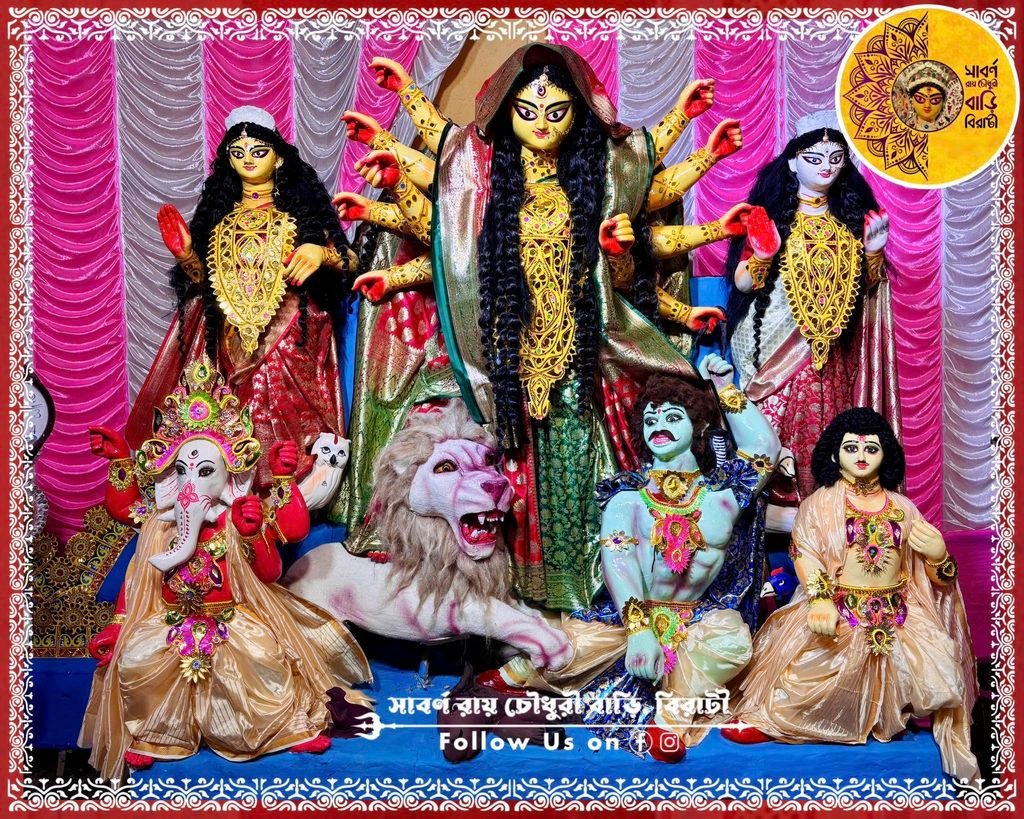
Address: 26 Sabarna Para Road, Barisha, Kolkata – 700008, near the historic Aatchala and Barisha area. The most convenient metro option is Sakher Bazar Metro, from where the house is roughly a 700-metre walk; Behala Chowrasta is another useful metro option depending on the direction from which you arrive. From Sakher Bazar, walk towards Barisha and Sabarna Para Road, or take a local auto for the last stretch. Local buses and autos running through the Behala-Barisha corridor are also practical, particularly from Behala Chowrasta. During Puja, road diversions can change the last-mile route, so the metro plus walking or auto option is generally easier. The house stands near Sakherbazar; from Behala Chowrasta, travel along Diamond Harbour Road to the Sakherbazar bus stop, turn right into K.K. Roychowdhury Road, which bends into Sabarna Para Road beside the Dwadash Shiva Temple.
Special Features: The Puja is held in the Aatchala, the structure that gives it its name, and two rows of graceful columns mark the boundary of the Durga dalan. Here the goddess is worshipped together with Lakshmi, Saraswati, Kartik and Ganesh within a single frame. The structure where the very first idol was made in Lakshmikanta’s time is still used today for preparing the idol. The red pillars along the approach to the dalan are said to have witnessed the discussions over the transfer of Sutanuti, Gobindapur and Kalikata. The family has since branched out, and the goddess is now worshipped in eight households: six at Barisha (Aatchala, Barobari, Mejobari, Benakibari, Majherbari and Kalikinkarbari), one at Birati and one at Nimta.
History: The family says Lakshmikanta Majumder and his wife Bhagabati Devi began the Puja in 1610. Family lore places this in Emperor Jahangir’s reign, with a large jagir granted in the time of Raja Man Singh. The Mughal title “Roy Chowdhury” came later, in 1626, so the Puja is older than the family name. In 1698 the family transferred its rights over Kalikata and the neighbouring villages to the East India Company.
2. Mallick Bari Singha Bahini
Starting year: 1614
Address: 39 Jatindra Mohan Avenue, Kolkata – 700006, in the north Kolkata belt. The practical metro options are Shyambazar or Shobhabazar Sutanuti, followed by a short auto or walking journey towards Jatindra Mohan Avenue. Local buses along A.P.C. Road and the north Kolkata corridor also provide access.
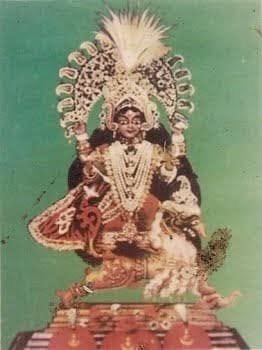
Special Features: The family worships an ashtadhatu, or eight-metal, Singhabahini rather than a clay Durga. The image has a built-in gold crown, and its lion looks more like a dragon. The Puja moves between the Jatindra Mohan Avenue house and the Kashinath Mullick Thakurbari on Mahatma Gandhi Road. Because the family is large, the idol stays with each branch in turn, and a branch is said to wait close to thirty years for its turn.
History: The tradition says Baidyanath Mallick found the idol in a cave at Chattagram in 1614. He carried it to Saptagram and, after what the family describes as divine intervention, began to worship it. The Puja is described as almost 400 years old. The 1614 date marks the discovery of the idol; whether public worship began that same year is not separately documented.
3. Harinath Mookerjee Family
Starting year: 1722
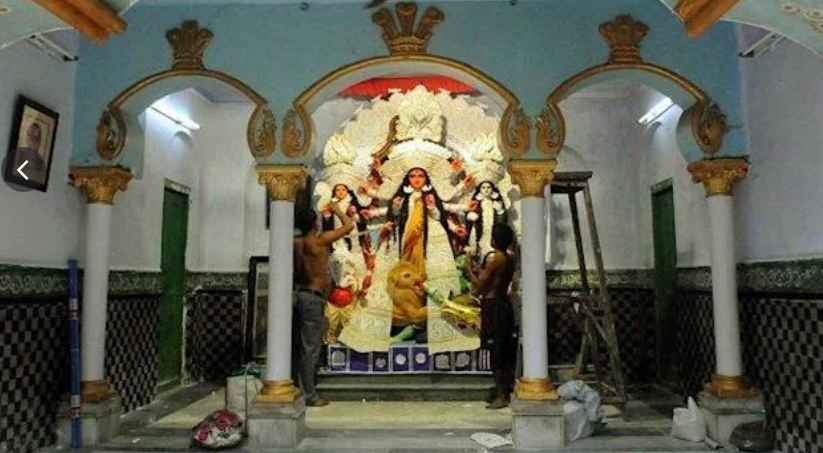
Address: 4 Kalidas Singha Lane, Kolkata – 700009, behind Rajabazar Science College. A practical metro route is Sealdah Metro, followed by an auto towards Rajabazar, while Mahatma Gandhi Road Metro can also be used with a longer road connection. From Sealdah, the Rajabazar stoppage and local autos provide a straightforward route. From Sealdah, get down at the Rajabazar stoppage, walk into Keshab Chandra Sen Street on the left, and Kalidas Singha Lane falls on the right after a couple of minutes.
Special Features: At the heart of the family’s worship is a metal ghot, a water pot that Harinath’s grandfather is said to have found while ploughing a field. After finding it, the grandfather dreamt of being told to worship Devi Mangalchandi every day. The thakurdalan is modest in size, but its entrance carries multicoloured stucco with figures and floral motifs. On either side stand a male and a female figure who look African in appearance and seem to wear chains, probably representing Habshi slaves of pre-British India.
History: The Puja began in 1722, when Harinath Mookerjee left his ancestral zamindari house at Gondolpara in Chandannagar and moved to Calcutta with his mother. He acquired two houses at Rajabazar, in what had been a washerman’s den, and installed Mangalchandi as the family deity. Under what he took as divine instruction, he began the Durga Puja there. He prospered as a jute supplier to the East India Company, became a zamindar and built the present mansion with its thakurdalan.
4. Biswanath Motilal Family Puja
Starting year: More than three centuries old; exact founding year not established.

Address: 1/C Durga Pithuri Lane, Kolkata – 700012. Esplanade Metro is a convenient central-Kolkata starting point, followed by an auto or short road journey towards Bowbazar; Chandni Chowk and Central can also be used depending on the route. From the Hind Cinema crossing on Ganesh Chandra Avenue, go along Nirmal Chandra Road towards Bowbazar; Hidaram Banerjee Lane opens on the right amid a bazaar, and Durga Pithuri Lane is the first turn on the left past the Dutta house.
Special Features: A brass multi-oil lamp of interesting shape burns in the house from Saptami onwards. The Puja is described as free of extravagance. A worn name plate outside the house reads “Here lived Babu Bisso Nath Motilal”, with the years 1779 and 1844. One popular theory says Bowbazar takes its name from a market Biswanath gave to his daughter-in-law, “bou” meaning bride.
History: The Motilals count among the oldest aristocratic families of Calcutta, with roots at Joynagar. They were originally Gangulys and were later given the title Motilal. The Durga Puja has been held in the family house for what the family and published accounts call over three centuries.
5. Chorbagan Mitra Bari
Starting year: Family says 300 to 350 years; no founding year is established.
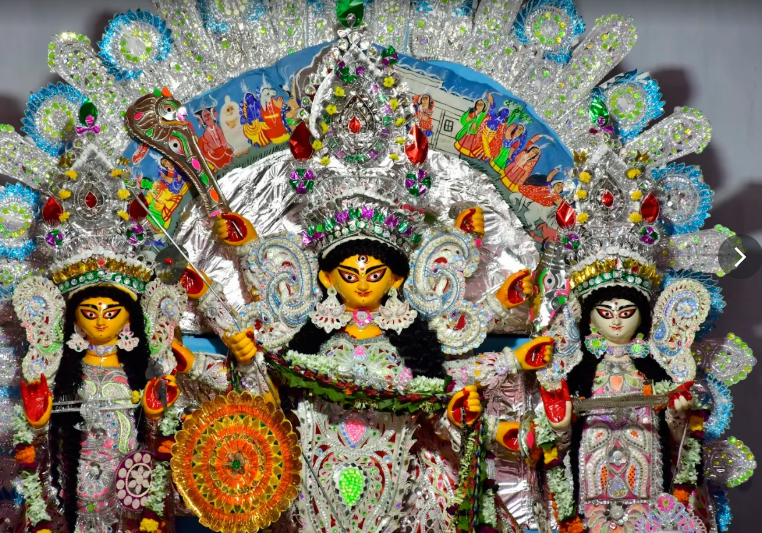
Address: 84 Muktaram Babu Street, Kolkata – 700007, in the Chorbagan-Jorasanko belt. Mahatma Gandhi Road Metro is one of the most practical metro options for this cluster, followed by a short walk or auto; Central and Chandni Chowk are also useful depending on the approach. The surrounding Muktaram Babu Street and College Street roads have extensive bus connectivity, but vehicle movement is heavily restricted during peak Puja hours. Enter Muktaram Babu Street from Central Avenue near Ram Mandir; the big red pillared house is right at the entrance.
Special Features: The mansion has six giant pillars at its entrance, an example of Gothic styling. The Puja is held alternately in the thakurdalan on Muktaram Babu Street and in the dalan reached through the very narrow Mitra Lane beside the house. The family also holds a Kali Puja, known as the Mithai Puja because about 150 kg of laddoos are offered to the goddess.
History: The house was built by Ramsundar Mitra, a moneylender who is said to have lent money to Lord Clive. The famous firm Macintosh and Burn was given the work of renovating it. The area was once called Chorbagan, “thieves’ garden”, because it was infested with dacoits. The house has since fallen into a crumbling state.
6. Beleghata Bhattacharya Family
Starting year: Approximately 1731; the exact year is not established.
Address: 1/2 P/1B Ramkrishna Naskar Lane, Kolkata – 700010. Phoolbagan Metro is the most practical metro option for Beleghata, followed by an auto or e-rickshaw towards Ramkrishna Naskar Lane. Local buses along Beleghata Main Road provide the road alternative. Going from the E.M. Bypass towards Beleghata, you pass the Dhiren Charu Smriti Sangha Puja on the left, and the Bhattacharya house falls a little further ahead on the left.
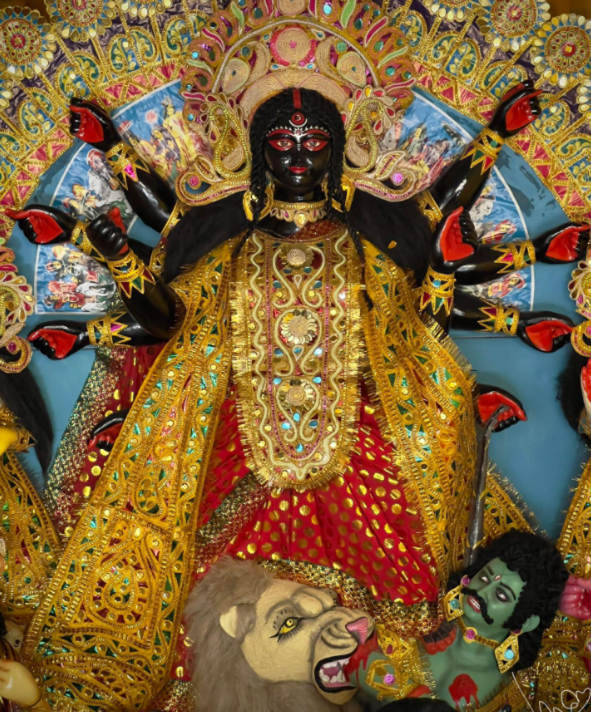
Special Features: The most striking thing is the colour of the goddess: Durga is black and Mahishasur is green. She is worshipped as Bhadrakali, following the Kalika Purana. Lakshmi and Kartik stand to her right, Saraswati and Ganesh to her left. The old traditions and rituals were kept intact when the Puja was moved from Bangladesh to Beleghata.
History: The Puja began at Sthal Basantapur in Pabna district, in present-day Bangladesh, under Sri Haridev Bhattacharya. The family came from Nadia, and Haridev settled at Sthal Basantapur after Rani Bhavani of Natore gave him land and he became a zamindar. He was a devotee of Kali, and the family worshipped Kali every year. A divine intervention is said to have told him to worship Durga at home in the form of a black idol.
7. Behala Roy Family
Starting year: 1756
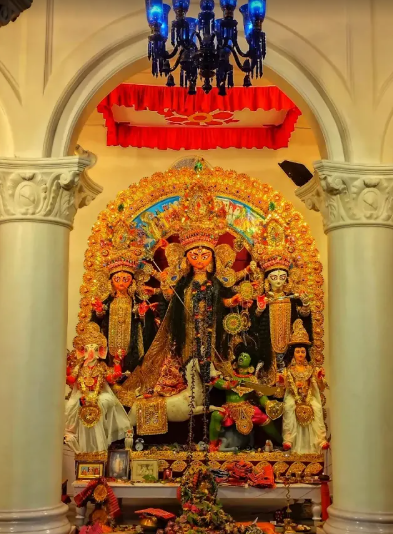
Address: Amarendra Bhavan, 4/1 Roy Bahadur A.C. Roy Road, Behala, Kolkata – 700034, near Behala Thana. Behala Chowrasta Metro is the most practical metro option, followed by an auto or local e-rickshaw towards Roy Bahadur A.C. Roy Road. Local buses along the Behala main road are another convenient option.
Special Features: The Puja is held in the white marble mansion Amarendra Bhawan, which his third son Amarendra Roy built. Jagaddhatri Puja is also celebrated here every year. The thakurdalan is described as beautiful.
History: Ambika Charan Roy started the Behala Puja in 1756, a year before the Sovabazar Rajbari Puja. He had accumulated enough wealth to set aside funds for continuing the Puja across the years. The family’s ancestor Gajendra Narayan Chattopadhyay served as treasurer at Saptagram under Emperor Jahangir and received the titles of Raja and Roy Choudhury. The family later moved to Halisahar and then Madhyamgram, where the annual Durga worship began. In 1742, fearing the Bargi raids, the Roy Choudhurys crossed the Maratha Ditch and settled at Behala.
8. Sovabazar Raj Bari
Starting year: 1757
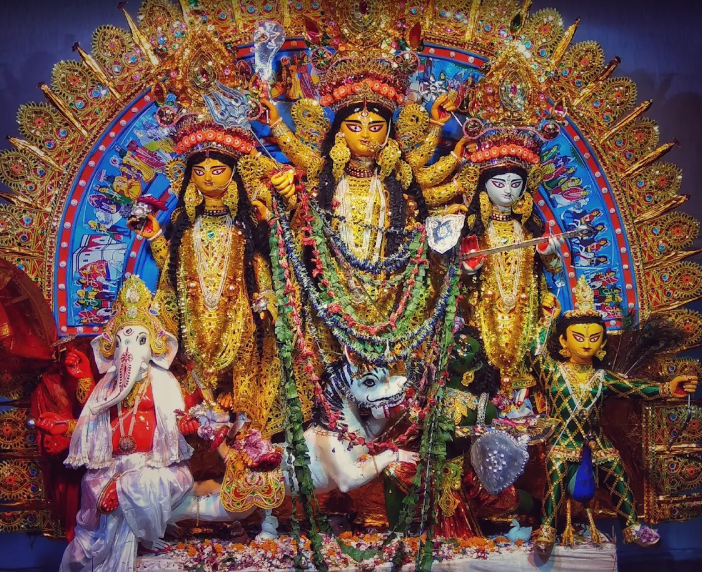
Address: 36 Raja Nabakrishna Street, Kolkata – 700005, with the smaller branch at 33 Raja Nabakrishna Street. Sovabazar Sutanuti Metro is by far the easiest metro route, followed by a short walk; with Shyambazar (0.8 km) and Girish Park (1.1 km) next. The area also has extensive bus connectivity through Shobhabazar, Chitpur and B.T. Road. From Sovabazar Metro, walk back towards Shyambazar keeping the Lal Mandir on your left; Raja Nabakrishna Street falls on the right, with No. 33, the old Rajbari, on the left and No. 36, the newer one, on the right.
Special Features: Few houses in Kolkata have received the Goddess as grandly as this one. The Puja grew famous for music, and the old saying goes that Durga comes here to listen to songs. All-night musical programmes were held in the Nachghar, the dancing hall, much of which has since collapsed. The Rajbari’s most vivid ritual used to be flying a nilkantha bird on Dashami; since the Wildlife Preservation Act forbade it, the family immerses clay models of the bird along with the idols. The house is also remembered through an old Kolkata belief: Durga wears her jewellery at the Daw house in Jorasanko, eats at Abhay Charan Mitra’s house in Kumartuli, and enjoys music and dance at Sovabazar. Ramakrishna Paramhansa, Swami Vivekananda and Rabindranath Tagore are all said to have visited the Rajbari on several occasions.
History: The first Durga Puja here was held in 1757, after the Battle of Plassey, at the Boro Rajbari at 33 Raja Nabakrishna Street, and Lord Clive and Warren Hastings were invited. This was an occasion on which people of other faiths were allowed to see a household Puja. Raja Nabakrishna Deb built the first house for his adopted son Gopimohan, and later the house at No. 36 for his natural son Rajkrishna. Today the Choto Rajbari is the better maintained of the two. The Clive story rests on family tradition.
9. Jhamapukur Chandra Bari
Starting year: 1761
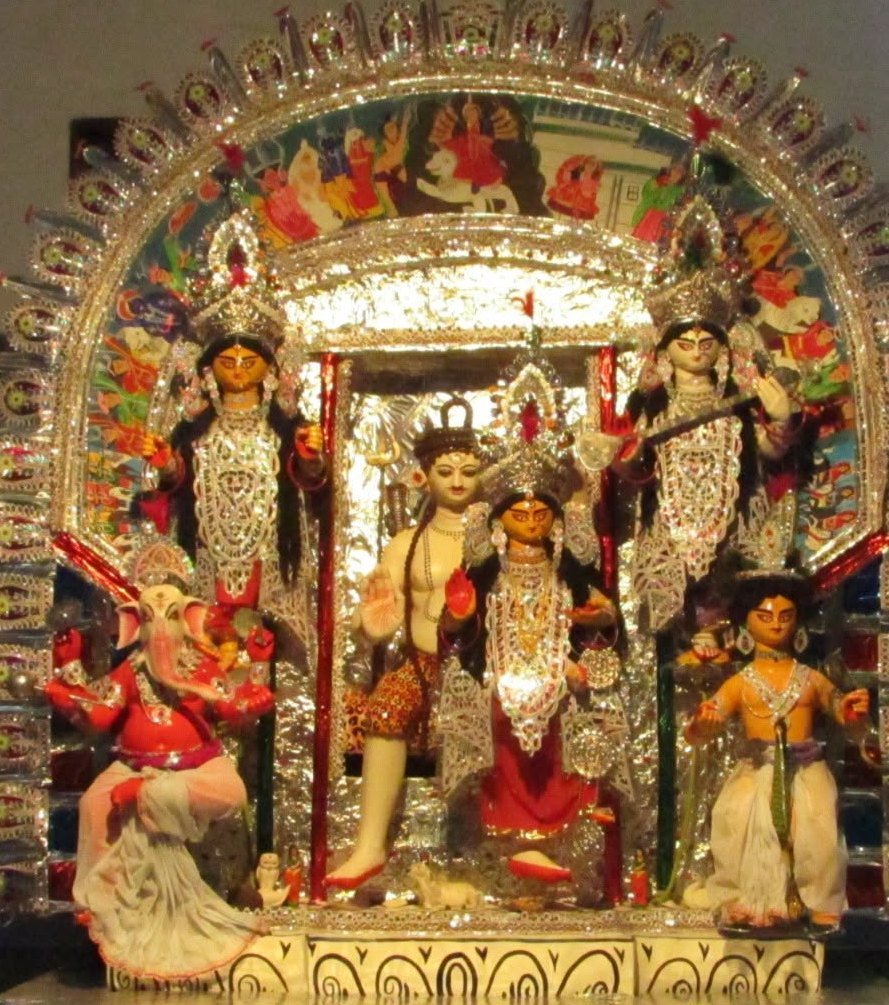
Address: 24A Bechu Chatterjee Street, Kolkata – 700009. Mahatma Gandhi Road Metro is around 700 metres away, making it the preferred metro route; the last stretch is roughly a 9-minute walk. City College and nearby Bidhan Sarani bus stops are practical road options. Bechu Chatterjee Street is just across from the Kali Bari; walk straight without turning, and after about ten minutes the house falls on your right.
Special Features: This is one of the most unusual idols in the city. Durga sits beside Shiva, and she has two hands instead of ten. She is not in her demon-slaying form, and is shown seated on Shiva’s lap.
History: The Puja was begun by Subal Chand Chandra, one of the earliest businessmen of Calcutta, who traded in textiles and is said to have had business units in Manchester. It was first held at his Jorasanko residence and moved to the Jhamapukur house in 1870.
10. Jagat Ram Mukherjee or Sonar Durga Bari
Starting year: 1769
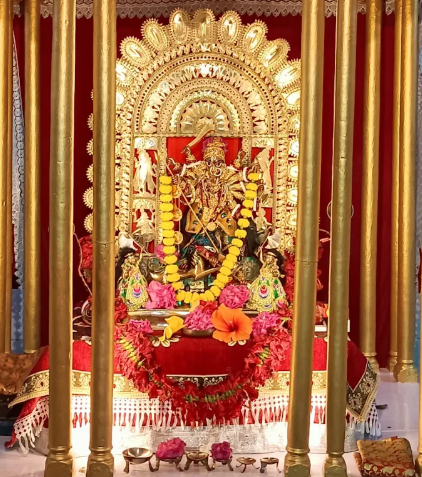
Address and how to reach: 56 Bramho Samaj Road, Behala, Kolkata – 700034, near the old Behala Tram Depot. Behala Chowrasta Metro is the practical metro-first route, followed by auto or e-rickshaw; local buses along Behala Tram Depot and Bramho Samaj Road provide the road alternative.
Special Features: The house is known for Sonar Durga, the golden Durga. The chalchitra is made of an alloy of eight metals and shows Lakshmi, Saraswati, Ganesh and Kartik. The family treats Durga as a daughter of the house, and no food is cooked on Dashami, the day she leaves for her husband’s home.
History: The story begins with a slight. Jagat Ram Mukherjee’s daughter and her cousins went to her maternal uncle’s house during the Puja, and she felt she was not properly looked after. She came home and asked her father to hold a Durga Puja in their own house. It was already Navami, so instead of an idol the family performed a symbolic ghot Puja in 1769. The bhog was a simple khichuri made from whatever the household had. From the next year a clay idol was worshipped. The family had moved from Barrackpore to Behala in 1740. The golden idol was introduced in 1869 by Iswar Jadunath Mukherjee, grandson of Jagat Ram Mukherjee.
11. Chhatu Babu-Latu Babu Bari
Starting year: 1770
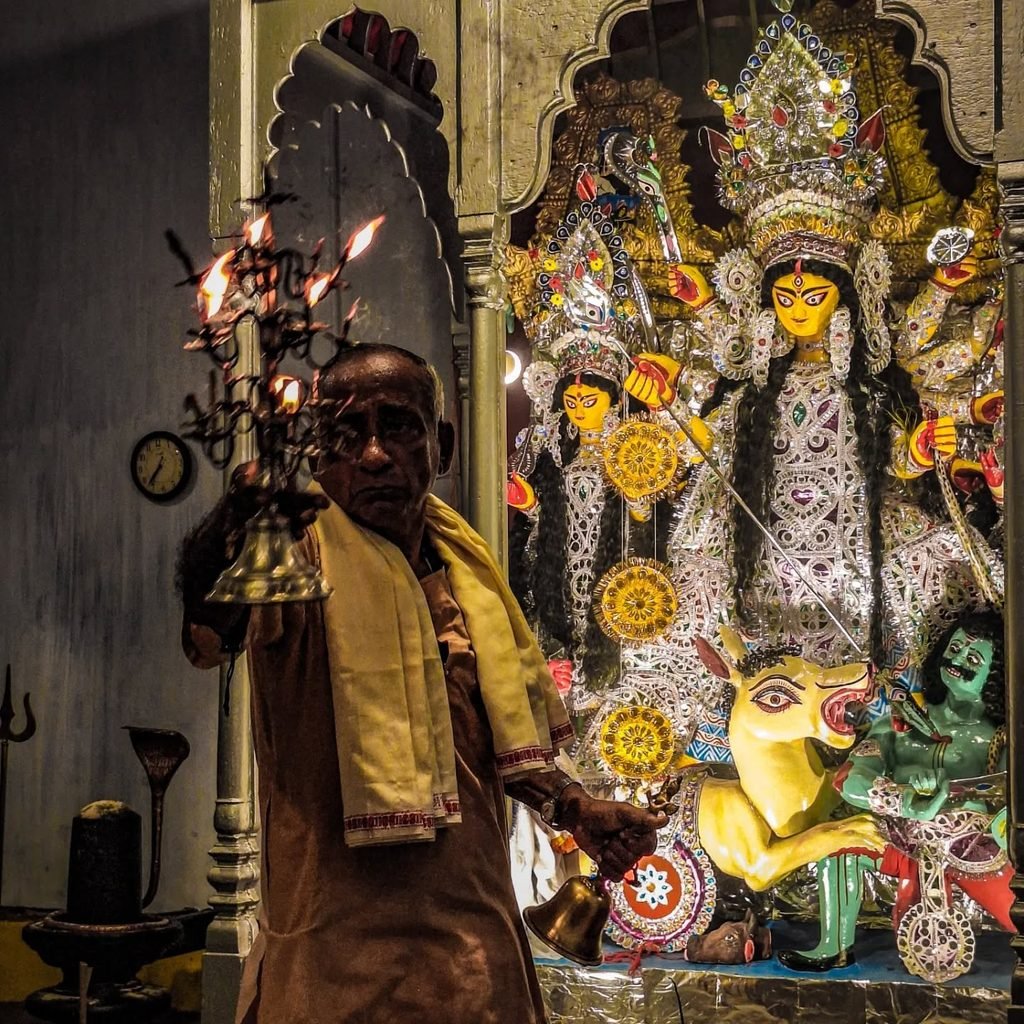
Address: Ram Dulal Nibas, 67E Beadon Street, Kolkata – 700006. Girish Park Metro is roughly 400 metres away, making this one of the easiest Bonedi houses to reach by metro. Beadon Street bus stop is also around 450 metres away, with several routes serving the corridor. The house stands at the crossing of Dani Ghosh Street, the extension of Beadon Street, and Central Avenue, and is hard to miss.
Special Features: Durga is decked in family heirlooms, including a Naulakha necklace. On either side of her, Jaya and Bijaya stand on lotuses, with hands raised and without a veena or pot. The bhog is deliberately plain: luchi and three vegetable dishes fried in ghee, cooked without salt. Many visitors come to see the Puja.
History: Ram Dulal Dey, also known as Deb Sarkar, began the Puja at his Beadon Street house in 1770. He rose from a very humble start to become one of the leading businessmen of old Calcutta, perhaps as the first Bengali entrepreneur to become a millionaire. After his death his sons Asutosh (Chhatu) and Pramathanath (Latu) carried it on, and the house is known by their names. A grandson, Anath Nath Dey, continued the Puja after them.
12. Rani Rashmoni Family
Starting year: 1774
Address: 13 Rani Rashmoni Road, 18/3 S.N. Banerjee Road and 18 Rani Rashmoni Road, Kolkata. Esplanade Metro is the most convenient central metro route, followed by walking or an auto depending on the exact house being visited. Esplanade, Dharmatala and S.N. Banerjee Road also have extensive bus connectivity.
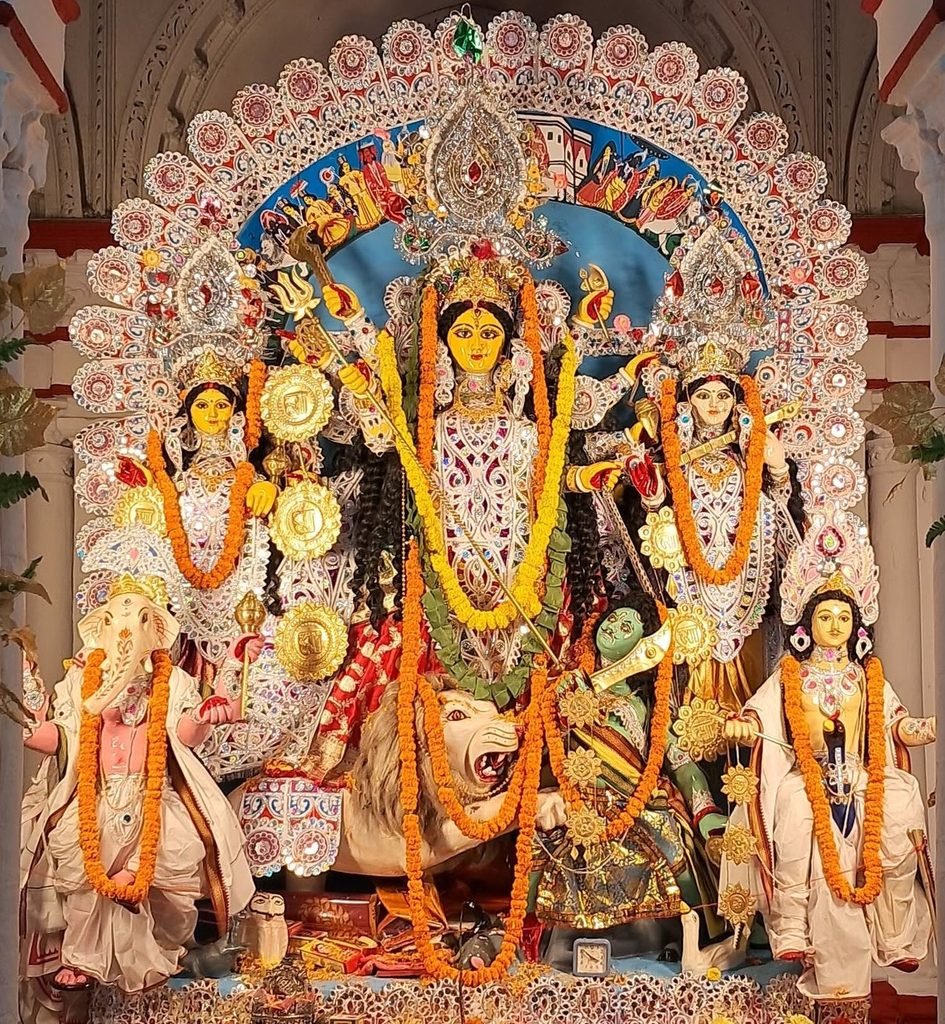
Special Features: The Puja is split across three houses. The Hazra family holds the Puja at 13 Rani Rashmoni Road, which was originally Rani Rashmoni’s kachari bari and is entered through Free School Street. Ramakrishna Paramhansa worshipped here. The Chowdhury family holds the second at 18/3 S.N. Banerjee Road. The Biswas family holds the third at 18 Rani Rashmoni Road, the Rani Rashmoni Bhawan, and is linked to her son-in-law Mathur Babu. That house has a square courtyard and a white thakurdalan, and the goddess is the traditional ekchala type in daker saaj.
History: Who started the puja, not confirmed. Some says Rani Rashmoni’s father-in-law, Pritaram Marh, began the Puja while some credits the Rani herself with starting it at her S.N. Banerjee Road residence. After her death in 1861 her daughters and sons-in-law continued the celebrations in their own premises. The Rani is remembered as the founder of the Dakshineswar Kali Temple.
13. Bhukailash Rajbari
Starting year: 1783
Address: Bhukailash Rajbari, Kanchan Colony, Babu Bazar, Khidderpore, Kolkata – 700023. Majerhat Metro on the Purple Line is the most useful metro option, followed by an auto or app cab for the final stretch; Majerhat is roughly 2.2 km away.
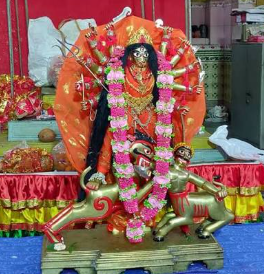
Special Features: The Puja is part of a palace and temple complex. Two Shiva temples stand on the banks of the large Shiva Ganga pond, with tall lingams known as Rakta-Kamaleshwar (about 11 feet) and Krishna-Chandreshwar (about 15 feet). Another temple inside the palace holds the Durga.
History: Raja Jaynarayan Ghoshal, born at Gobindapore in 1752, made his fortune trading in salt, gold and precious stones. He moved his estate from the site of today’s Fort William to Khidderpore, over roughly 200 bighas. He built the two Shiva temples in 1782 and a third temple inside his palace the year after, where he installed the Durga.
14. Baishnab Das Mallick Bari
Starting year: 1785

Address: 32 Darpanarayan Tagore Street, Kolkata – 700006. Shobhabazar Sutanuti or Girish Park Metro can be used, followed by an auto or walk through the Jorabagan-Malapara area. The house lies in the same broader north Kolkata Bonedi trail that includes Khelat Ghosh and other historic families. From Girish Park, cross Rabindra Sarani, take Jadulal Mallick Road on the right, then turn left into Darpanarayan Street; the house falls on your left.
Special Features: Durga is not shown as Mahishasuramardini here. She sits on Shiva’s lap in the form of Hara Gouri. Her attendants are taller than Kartik and Ganesh, and in one account taller than the goddess herself. The chalchitra shows scenes from the Vishnu Purana and Chandi. Married women perform the dhuno porano on Mahashtami, holding burning malsas on their hands and heads and praying for their children and families. At immersion the idol is carried on the shoulders of family members instead of in a vehicle.
History: Baishnab Das Mallick came from Chinsurah and was a gold merchant who later moved into real estate. He began the Puja in 1785 after seeing the Goddess in a dream. The mansion has a large, well-decorated courtyard.
15. Haatkhola Dutta Bari
Starting year: 1794
Address: 78 Nimtala Ghat Street, Kolkata – 700006. Shobhabazar Sutanuti Metro is the practical metro-first option, followed by an auto or walk towards Nimtala Ghat Street. Local buses along Chitpur Road and B.T. Road provide the road option. From Central Avenue turn into Dani Ghosh Lane, cross Rabindra Sarani, continue along Nimtala Ghat Street past a huge ruin that was once the Scottish Church Collegiate School, and the Dutta house is on your right.
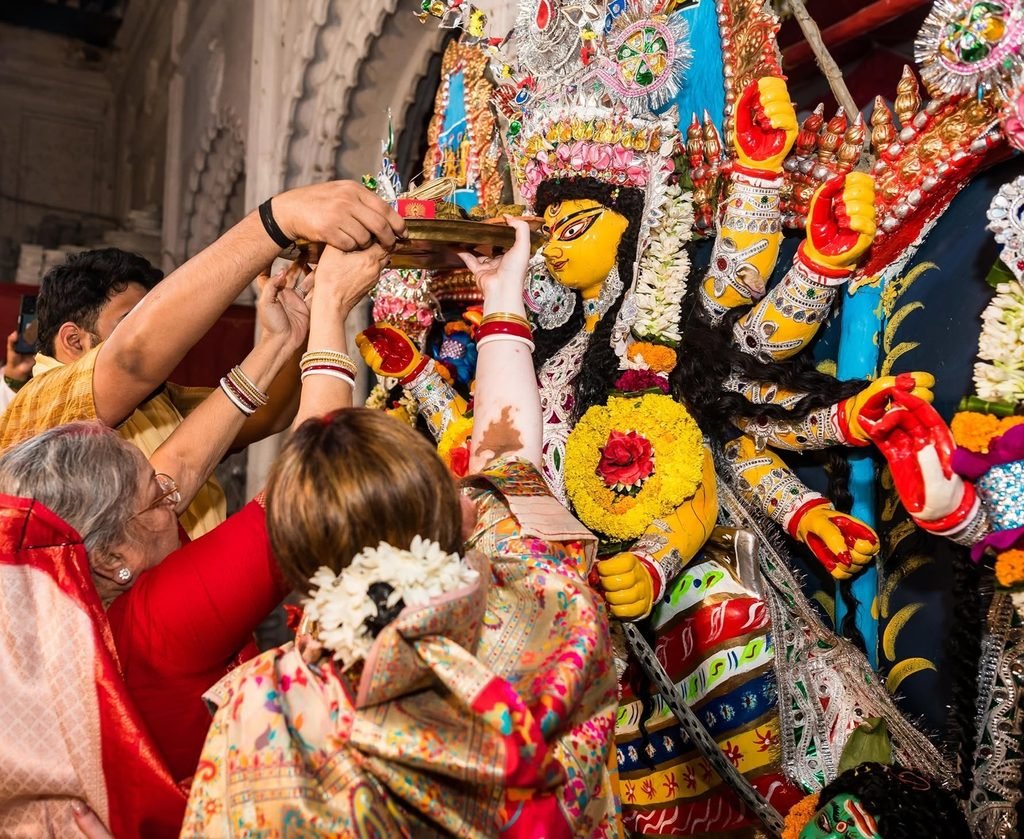
Special Features: The idol’s sari and jewellery are modelled in clay and painted, and Kartik wears a soldier’s uniform. Rice and potato are not used in the bhog. A khirer putul, a doll of thickened milk, is offered symbolically. After immersion the men return home singing “Banga Amar Janani Amar” by D.L. Roy. Once the idol is on the altar, only Brahmins touch it, and on Dashami the married women perform the baran. The family also holds Kali Puja and Rathyatra, and used to release a nilkantha bird after immersion.
History: Dewan Jagatram Dutta left the house of his cousin Madan Mohan Dutta in 1788 and built a mansion on Nimtala Ghat Street. He began the Durga Puja and Kali Puja there in 1794. The family’s roots lie in Andul, and Jagatram’s grandfather Ramchandra worked at the East India Company’s Patna warehouse.
16. Madan Mohan Dutta Bari
Starting year: Late 18th century
Address: 2 Dutta Para Lane, Kolkata – 700020. The best route depends on the exact Puja-day road restrictions, so reach the nearest central Kolkata metro station and take an auto for the final stretch. The house is part of the old Dutta family network associated with the Haatkhola area. From Nimtala Ghat Street, pass Ram Seth Lane, then a narrow lane with an old brick Shiva temple topped with banyan roots; Dutta Para Lane runs parallel to Nimtala Ghat Street, and the house is on your right after turning left into it.
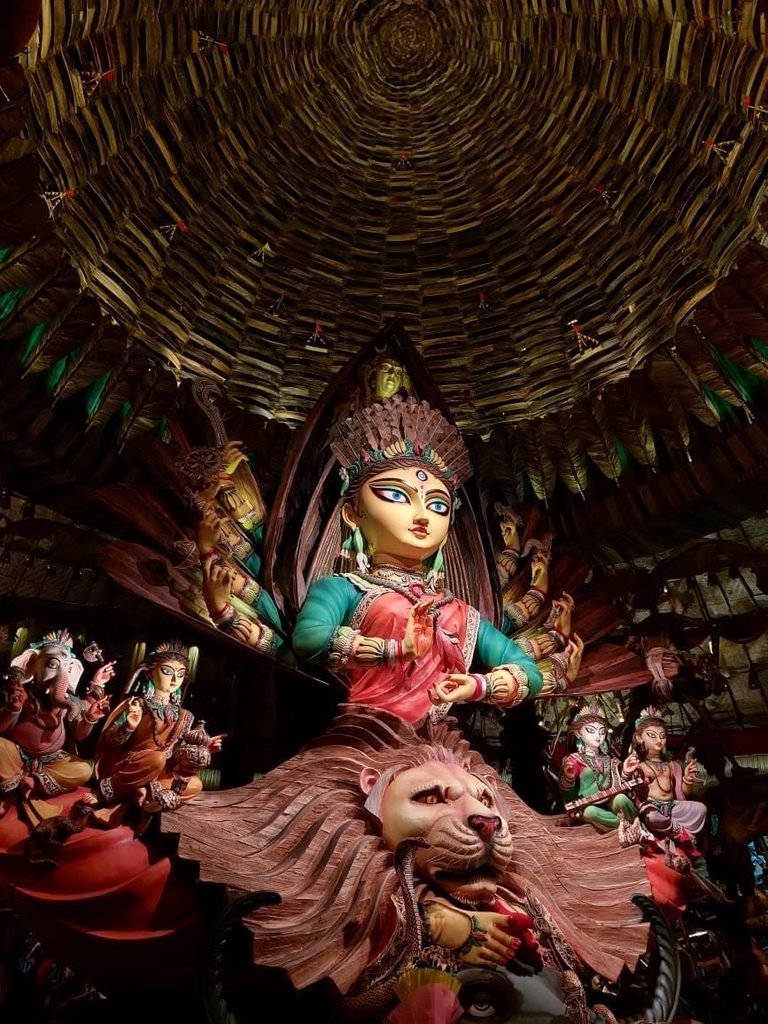
Special Features: The house is so well kept and celebrates so grandly that visitors often mistake it for the “real” Hathkhola Dutta Bari. The Puja follows Vaishnava rituals, with no animal sacrifice.
History: The Duttas trace themselves to Andul, where Gobindasharan Dutta Chaudhury left after quarrels over ancestral property and later served under Raja Todar Mal. His grandson Ram Chandra Dutta gave up land at Gobindapur, where Fort William was built, and moved to Hathkhola. Madan Mohan Dutta, Ram Chandra’s grandson, became a rich and religious merchant, and his house gave the Hathkhola Duttas their name. It is said that he made a registered will leaving his property to his daughters’ side.
17. Akrur Dutta Bari
Starting year: Late 18th century
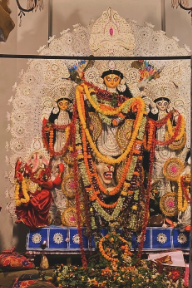
Address: 1 Rajen Datta Lane, Kolkata – 700012. Chandni Chowk Metro is a convenient, followed by an auto or walk towards Wellington Square. Walking from Wellington Square towards College Street, Akrur Dutta Lane falls on the right after crossing Ganesh Chandra Avenue.
Special Features: The thakurdalan is now hidden from the road because a block of flats has risen in front of it. Durga’s weapons are made of brass; they are fitted on the goddess at bodhan and removed before immersion, and every year they are polished before the Puja. A hideout under the thakurdalan is said to have opened onto Wellington Square, from the days when Bengal lived in fear of Maratha and Arakan raids.
History: Akrur Dutta was born in 1720 at Sonatikri in Hooghly and came to Calcutta in 1740. He worked as a contract merchant and later did business with Pritiram Marh, Rani Rashmoni’s father-in-law, which made him rich. He founded the Dutta family of Wellington Square.
18. Bagbazar Haldar Bari
Starting year: The idol is dated by family tradition to about 1560; worship in the present Bagbazar house began in the early 19th century.

Address: 17/1 Kaliprasad Chakraborty Street, Kolkata – 700003. Shyambazar Metro is approximately 600 metres away, making it the best metro-first route; from the station, the final stretch can be walked or covered by auto. The lane lies opposite Khirodeprasad Vidyavinod Mancha on Bagbazar Street, near the Baghbazar Sarbojanin pandal; the house is on the left, opposite Gouriya Math.
Special Features: Unlike most family Pujas, the deity is a touchstone idol of Mahishasuramardini. It stands about two feet tall and weighs 25 to 30 kg. The goddess has ten arms, her right foot rests on the lion and her left on Mahishasur, and a face of Mahakal appears above her. Two winged figures hover on either side of her forehead, and two small women holding weapons stand near her feet, who may be Jaya and Bijaya. The Goddess is worshipped here every day.
History: An ancestor of the Haldars was the zamindar of Nawpara at Chandannagar. On a pleasure trip to Sahebpur near Balasore in Odisha, he had a dream about the idol, and it was dug up from about 14 feet below a Muslim fisherman’s house. Tradition dates this to 1560. The idol has been in the Haldar house at Bagbazar for about the last 200 years, and the Puja flourished under Prankrishna Haldar, a zamindar of the early 19th century who liked to invite the British.
19. Laha Family
Starting year: Over two centuries old; no founding year is documented.
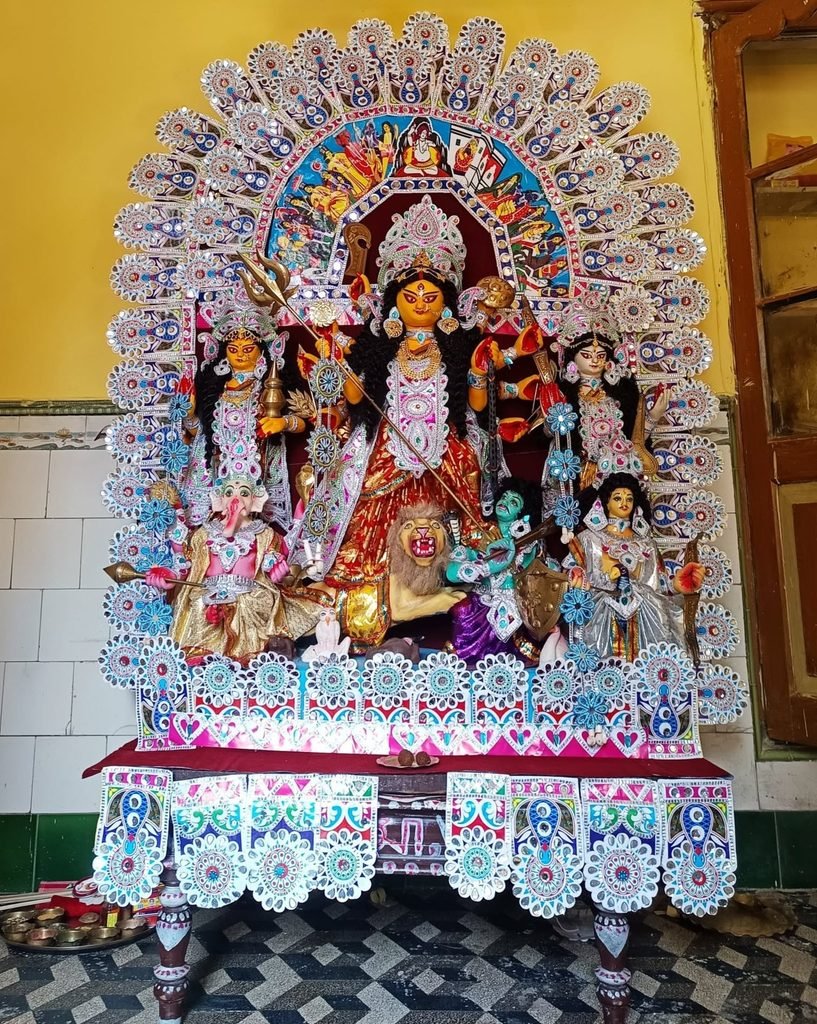
Address: The family Puja is associated with 2A Bidhan Sarani, 121 Muktaram Babu Street, 50A Kailash Bose Street and 1 Bechu Chatterjee Street, depending on the family branch and year. Mahatma Gandhi Road Metro is the most useful metro for the Bidhan Sarani and Bechu Chatterjee Street houses, with walking or auto for the last stretch. Check which house hosts it in the year you visit.
Special Features: Durga sits on Shiva’s lap with her eyes closed, with no weapons, no lion and no Asur, in the form called Hara Gouri or Shiv Durga. An ashtadhatu image called Jai Jai Ma is brought from the family seat to the thakurdalan during the Puja. The bhog is a The bhog is a long sweet menu: more than 20 kinds are offered, from tiler nadu and narkel nadu to paan gaja, ledikeni and pantua, and there is no anna bhog.
History: The first generation, Madhu Mangal Laha, did business at Saptagram. The Puja was begun by Bhagabati Charan Laha and flourished in the time of Prankrishna Laha, who built up a very profitable business. It rotates among the houses of different branches. Family hearsay says that the original ashtadhatu image was once stolen, but the thieves discarded it when they found it was not pure gold, and a family member bought it back.
20. Darjipara Mitra Bari
Starting year: 1809
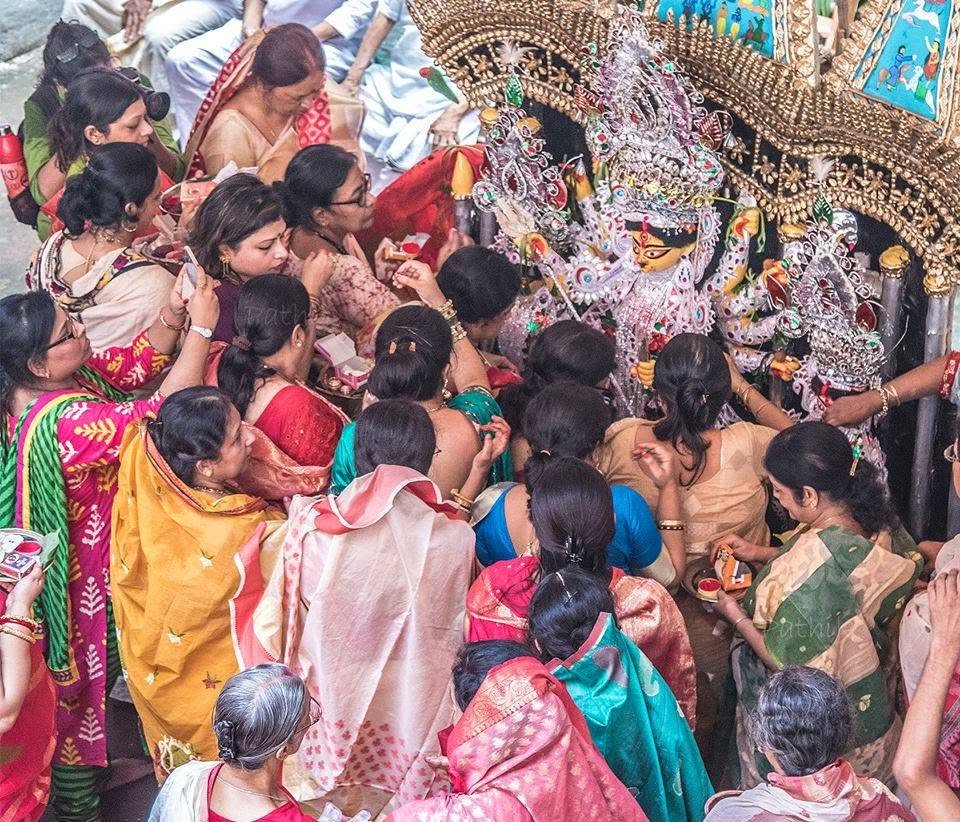
Address: 19 Nilmoni Mitra Street (with a second house at 42 Beadon Row), Kolkata – 700006. Girish Park Metro is approximately 300 metres away, making this one of the most convenient Bonedi Pujas for metro travellers. Walk from Girish Park towards Nilmoni Mitra Street. A few metres along Jatindra Mohan Avenue from Chhatu Babu-Latu Babu’s house towards Sovabazar, Nilmani Mitra Street falls on the right, and the first house is the massive Mitra mansion.
Special Features: Instead of 108 lotuses, the family offers 108 aparajita flowers. The chala is the traditional Muttchouri, with three arches supported by four pillars and topped by three tomb-like structures that stand for the three Mahashaktis. The idols sit on a throne about 210 years old. The family dresses and decorates the idol itself. On Dashami the women of the house eat a meal of shukto, shaak, fish and achaar that was offered as bhog. The house once released two nilkantha birds on Dashami, one towards Kailash to tell Shiva that Durga was returning and one towards the house to say she would come again.
History: Durgacharan Mitra, a reputed businessman, was court jeweller to Nawab Siraj-ud-Daulah. His nephew Nilmani Mitra carried on the legacy, and Nilmani’s grandson Radhakrishna Mitra restored the family’s fortunes and started the Durga Puja. The area was once called Darjipara because many tailors lived there. This was once counted among the top three Bonedi Pujas of Calcutta, with the Jorasanko Daw house and Sovabazar Rajbari.
21. Tarak Pramanick Bari
Starting year: More than two centuries old; the family’s brass chariot is estimated at about 1746.
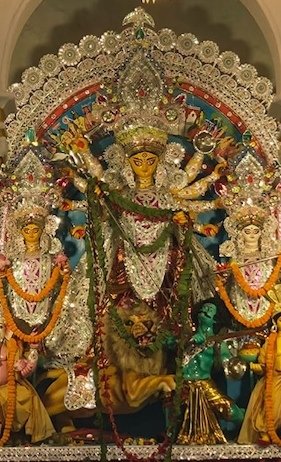
Address: 154 Tarak Pramanick Road, Kolkata. The practical route is to reach the nearest north Kolkata metro station for the Tarak Pramanick Road area and continue by auto or local road transport; because the narrow lanes around the old house can be affected by Puja restrictions, an auto from the main road is preferable to taking a private car all the way.
Special Features: Durga Puja, Kali Puja and Rathyatra are all held in the same dalan. The Puja follows the Kalika Purana, and Kumari Puja and dhuno porano are not practised at Durga Puja, though Kumari Puja is held at Kali Puja. Unlike other Bonedi houses, the nabapatrika is not taken to the Ganges; it is bathed in the dalan with several kinds of water, including rain water, dew and Ganges water. The family deity is Sridhar Jiu, who stays in a bodhan ghar beside the dalan until Sashthi, comes to the dalan on Saptami and is worshipped alongside Durga, with Lakshmi brought down from the thakurghar, until the morning of Dashami. The brass chariot is about twelve feet tall, with eight fairies holding flags at its corners, and it moves around the courtyard on Rathayatra.
History: The Puja was started by Gurucharan Pramanick, father of Tarak Pramanick. The Pramanicks were in the brass, bronze and copper trade, and the chariot was built in Gurucharan’s time.
22. Pataldanga Basu Mallick Bari
Starting year: 1831
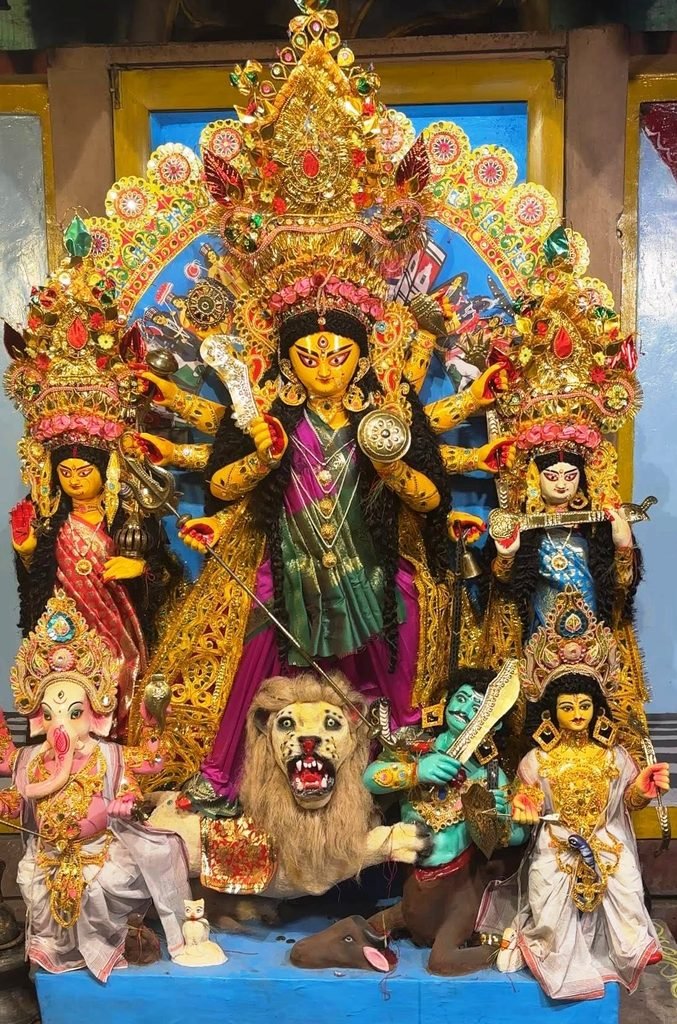
Address: 18 and 22 Radhanath Mallick Lane, Kolkata – 700012. Mahatma Gandhi Road Metro is the most useful metro route, followed by an auto or walk towards Surya Sen Street and Radhanath Mallick Lane. The lane starts at 22 Surya Sen Street, right after Putiram’s eatery as you travel towards Sealdah from College Street.
Special Features: The lion is not an ordinary lion: it has a horse’s body and a dragon’s face. The oldest mansion at No. 18 has a large courtyard with mercury statues that once held gas lamps, and stucco figures of Vishnu’s ten avatars above the arches of the thakurdalan. At No. 22 the thakurdalan has a cast-iron frame with glass behind it, and the idol is ekchala. The house has a dancing room on the first floor. The men of the house play with clay and mud to the beat of the dhaak in a ritual called Kadamati Khela. Guns were fired at Sandhi Puja to announce the moment. Rabindranath Tagore is recorded as visiting in 1905.
History: Radhanath Mallick began the Puja at 18 Radhanath Mallick Lane in 1831. He did business with the British, was among the first Bengalis to learn English, and owned around 40 houses when he died at 44. His grandson Kshetra Mohan Basu Mallick started the Puja at No. 22.
23. Shib Krishna Daw Bari
Starting year: 1840

Address: 12A Shibkrishna Dawn Lane, Kolkata – 700007. Shobhabazar Sutanuti or Girish Park Metro can be used, followed by an auto or walk through the Jorasanko area. The narrow lane is better approached on foot after getting down on the main road. It is best to walk from Girish Park, since the lane is one way; it begins on the left just after 24A Vivekananda Road.
Special Features: The goddess is decorated with gold ornaments in large quantity on the chalchitra, along with diamonds and emeralds brought from Europe. That is why Durga is said to wear her jewellery here. She wears a maroon velvet saree. The thakurdalan has overhanging balconies, and the house has often been a film location. Old family records show that the Puja cost Rupees 2,500 about 150 years ago.
History: Gokul Chandra Dawn of Satgachia settled at Jorasanko and adopted Shibkrishna Dutta, a relative’s son. He began the Puja in 1840, and Shibkrishna and his descendants carried it on. Shibkrishna built a colliery and played a part in the building of the railway lines. The Rasbari at Belur in Howrah also belonged to this family.
24. Kabiraj Ganga Prasad Sen Bari
Starting year: About 1840
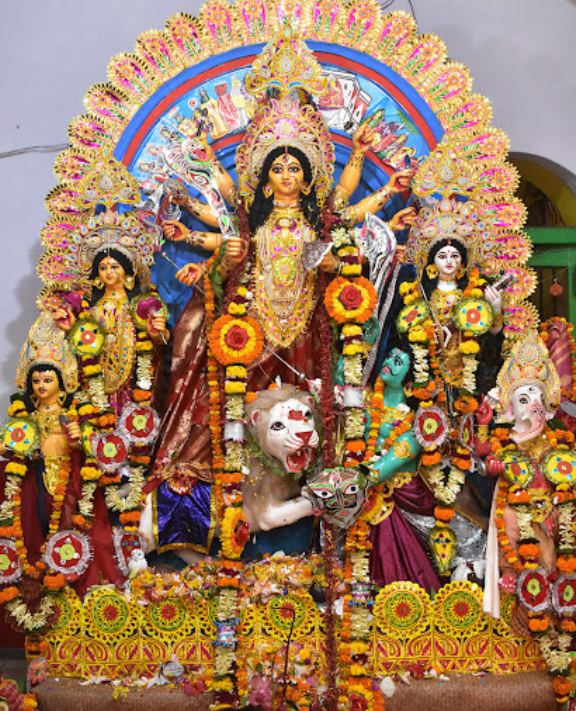
Address: 17 Kumartuli Street, Kolkata – 700005. Shobhabazar Sutanuti Metro is the most convenient metro, followed by a short auto ride or walk towards Kumartuli. Local buses along Chitpur Road and B.T. Road are the road alternative.
Special Features: The idol is ekchala, and the arrangement has an unusual twist: Kartik stands on the left below Lakshmi, and Ganesh on the right below Saraswati. The thakurdalan is beautifully decorated. The Puja is run by a trust that the Kabiraj himself set up. The family follows Shaiva worship, and animal sacrifice, once practised, has been stopped.
History: Nilambar Sen was a renowned Kabiraj from Dhaka, and his son Ganga Prasad became an equally gifted physician after settling at Kumartuli. Ganga Prasad’s patients included Sri Ramakrishna, and a stone plaque outside the house records his fame. He earned enough to begin a Durga Puja in his house with proper grandeur.
25. Pathuriaghata Khelat Ghosh Bari
Starting year: 1855
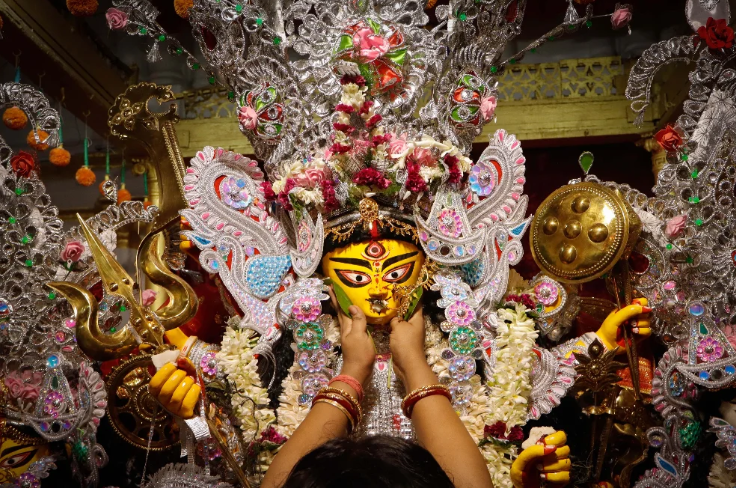
Address: 47 Pathuriaghata Street, Kolkata – 700006. The house is near Malapara Bus Stoppage and Chitpur Lohia Sadan. Reach Shobhabazar Sutanuti or Girish Park by metro, then take an auto or walk depending on the exact road restrictions. Pathuriaghata Street is the lane opposite Lohia Matri Sadan on Rabindra Sarani; walk straight past the Pancher Pally Puja pandal and the Khelat Bhawan stands on your left.
Special Features: The thakurdalan is one of the largest in Kolkata, perhaps the largest. It has an 85-foot marble corridor and a grand dancing hall, now the Khelat Ghosh Memorial Hall. The house keeps Belgian cut-glass chandeliers and a Thomasson Chronometer grandfather clock from London. On Saptami morning the idol is bathed with water from the proverbial “seven oceans and thirteen rivers” and with the juice of 12 fruits. On Ashtami a symbolic sacrifice of sugar structures, known as Mata Chini, takes place, and a unique offering is Chandana Kheer made from a century-old recipe. The family also holds Kumari Puja on Ashtami, and Jagaddhatri, Kartik and Saraswati Pujas, with each idol prepared in the thakurdalan itself.
History: Babu Khelat Chandra Ghosh was a Diwan at Warren Hastings’s court and a patron of classical music, dance and other arts.
26. Ramgopal Saha Bari
Starting year: More than 175 years old
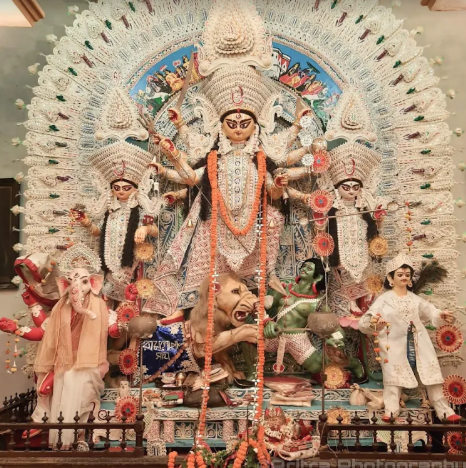
Address: 4 Thakurdas Palit Lane, Kolkata – 700012. Chandni Chowk Metro is a practical metro option, followed by a short auto or walk into the lane. Thakur Das Palit Lane is the continuation of Akrur Dutta Lane; the huge building is on the right, and the lane narrows towards the end.
Special Features: The thakurdalan is richly decorated and once impressed the photographer Raghu Rai. The family now restricts photography, and an uninvited person with a camera is not welcome during Sandhi Puja.
History: Ramgopal Saha was a famous wine and liquor merchant. The Puja he started is more than 175 years old.
27. Sisir Kumar Haldar Bari
Starting year: 1847
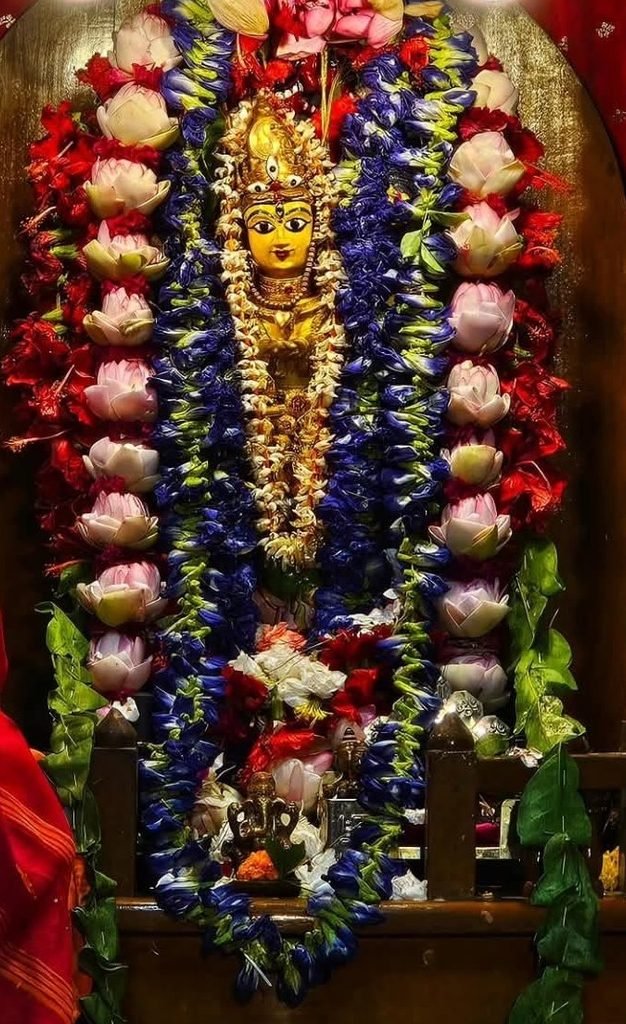
Address: 15 Ramanath Kabiraj Lane, also associated with 55 Sashibhusan Dey Street, Kolkata – 700012. Chandni Chowk Metro is a practical metro route, followed by an auto or walk into the lane.
Special Features: The idol is an ashtadhatu Singhabahini. It lives in the thakurghar, is brought to the thakurdalan on Sashthi, and returns after Dashami. The thakurdalan has an unusual shape with stained-glass decoration. Kali Puja is also celebrated here with great gaiety.
History: The Puja is credited to Rashmoni, wife of a Haldar. A family member explains that before the Singhabahini image arrived, a Durga idol was made and worshipped in the thakurdalan itself, so the Puja is older than the metal image.
28. Thanthania Dutta Bari
Starting year: 1855
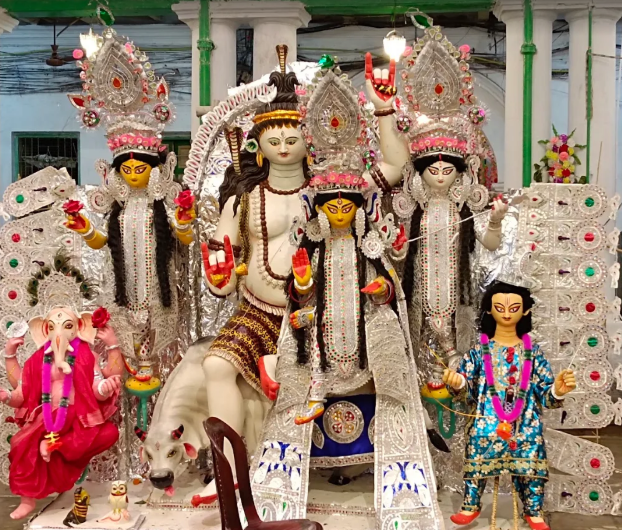
Address: 3 Bidhan Sarani, Kolkata – 700006, near Thanthania Kali Bari. Mahatma Gandhi Road Metro is the most practical metro, followed by a short walk or auto along Bidhan Sarani.
Special Features: Durga is worshipped as Hara Gouri, or Shiva Durga, seated peacefully on Shiva’s lap, showing Abhaya and Varada mudras. The Puja follows the Vaishnav method. Married women perform the dhuno porano together, holding burning malsas. In earlier generations there were music, dance and yatras, and an upper-floor gallery let the women of the house watch them. The present priest’s family has served for five generations.
History: Dwarakanath Dutta began the Puja in 1855. Believed he was inspired by a dream of the Hara Gouri form of Shiva and Durga. He is remembered for giving his workers a Puja bonus.
29. Chorbagan Seal Bari
Starting year: About 1856
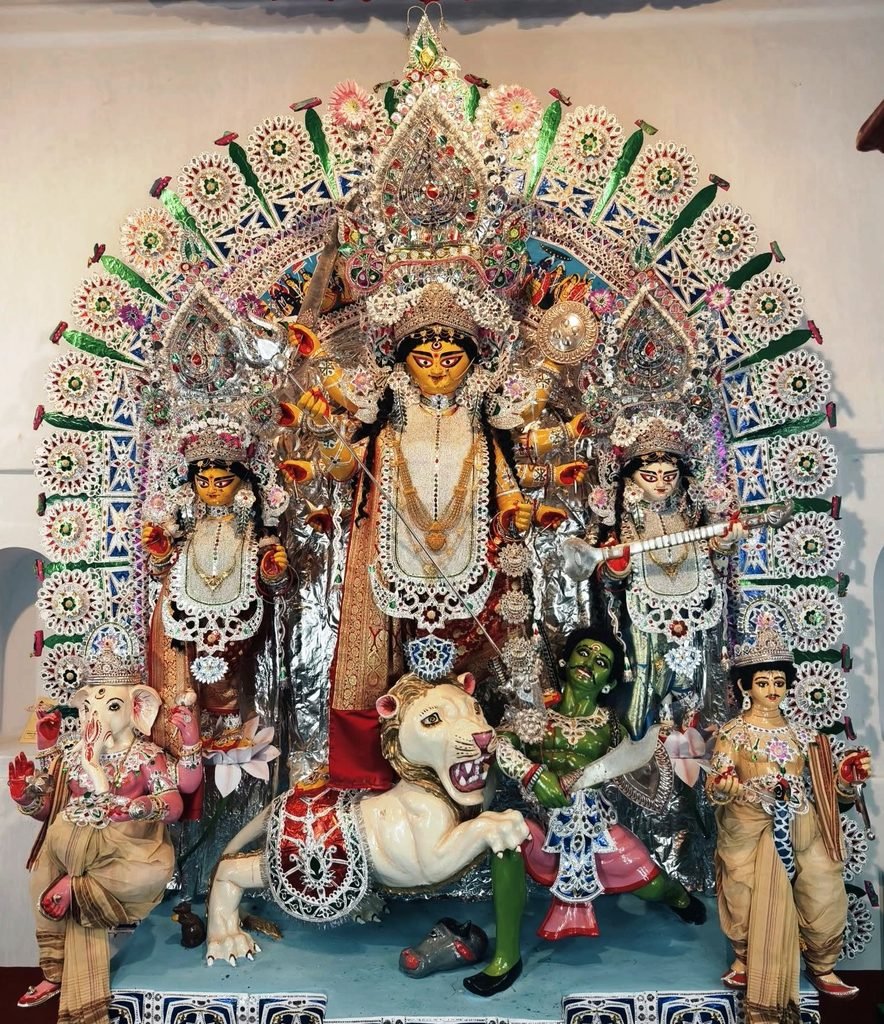
Address: 42 Muktaram Babu Street, Kolkata – 700007. Mahatma Gandhi Road Metro is around 300 metres away, roughly a four-minute walk. From Girish Park towards Esplanade, enter the part of Muktaram Babu Street on the right; the house is a few steps after the Marble Palace, on the left.
Special Features: The family follows Vaishnavism, so no animal or fruit sacrifice is offered. The family is strictly vegetarian, and a plaque on the house records the Puja’s beginning. The thakurdalan is beautifully decorated, and the idol has been called mesmerising.
History: Kshetramani Dasi, wife of the businessman Ram Chand Seal, took the initiative to begin the Puja. Ram Chand came from Gutiabazar in Hooghly, moved to Calcutta in 1849 and imported textiles from Manchester while exporting rice, vermilion and mercury. The first Puja was held at his guru’s house in Goswami Lane, Bagbazar, and was shifted to Chorbagan in 1856.
30. Ghose Family, Ghosh Lane
Starting year: 1856
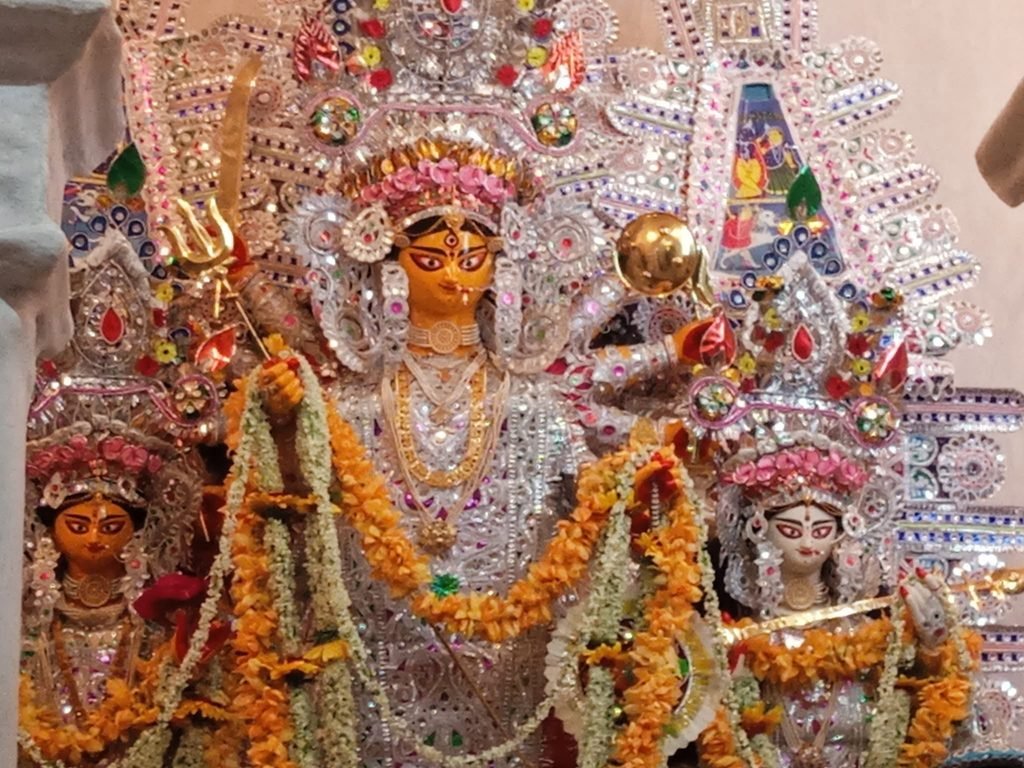
Address: 4 Ghosh Lane, Maniktala, Kolkata – 700006. Shyambazar or Girish Park Metro can be used, followed by an auto towards Vivekananda Road and Ghosh Lane. Local buses along A.P.C. Road and Vivekananda Road provide another option. Ghosh Lane lies on the opposite footpath from the Maniktala Saha house, off Vivekananda Road, with the locally famous Chanchala sweet shop at its mouth; turn right where the lane narrows.
Special Features: The family holds Kalyani Puja instead of Sandhi Puja, and 108 earthen lamps are lit just as in Sandhi Puja. The reason, as the family tells it, is that Girish Chandra’s guru died during a Sandhi Puja, after which Sandhi Puja was dropped. Kumari Puja and dhuno porano are performed as well.
History: Girish Chandra Ghosh began the Puja in 1856. The family came from Paranchapur in Hooghly, where the deity Madhusudan was associated with an older Durga Puja. Puja materials were once carried from Baghbazar ghat to Mogra and on to the village by boat.
31. Badan Chandra Roy Bari
Starting year: 1858
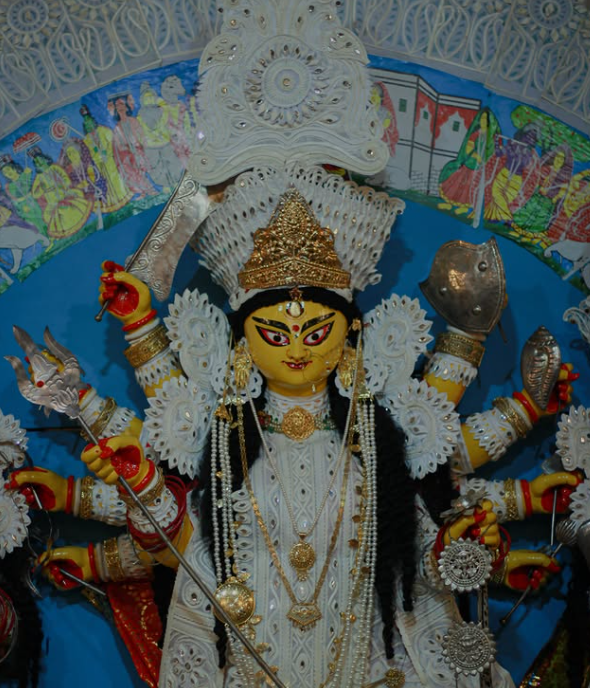
Address: 2A Gopal Chandra Lane, Tiretti/Colootola, Kolkata – 700073. Central Metro is the nearest practical metro option, while Medical College is a useful bus stop and road landmark.
Special Features: The thakurdalan is large, with white pillars topped by decorative lamps, and the lights along its sides look beautiful at night. The goddess sits on an altar under a chalchitra decorated in daker saj. Until the 1960s the tiny figures on the chalchitra were painted by hand, but now they are printed sheets. A family member says fruits are used for the symbolic sacrifice.
History: Badan Chandra Roy, of the Subarna Banik community, began the Puja in the palatial three-storey house that Mackintosh and Burn had built. The family originally settled near Eden Hospital Road, but that house was cleared to make way for Central Avenue. The house has been a trust estate since 1858.
32. Purna Chandra Dhar Bari
Starting year: About 1858
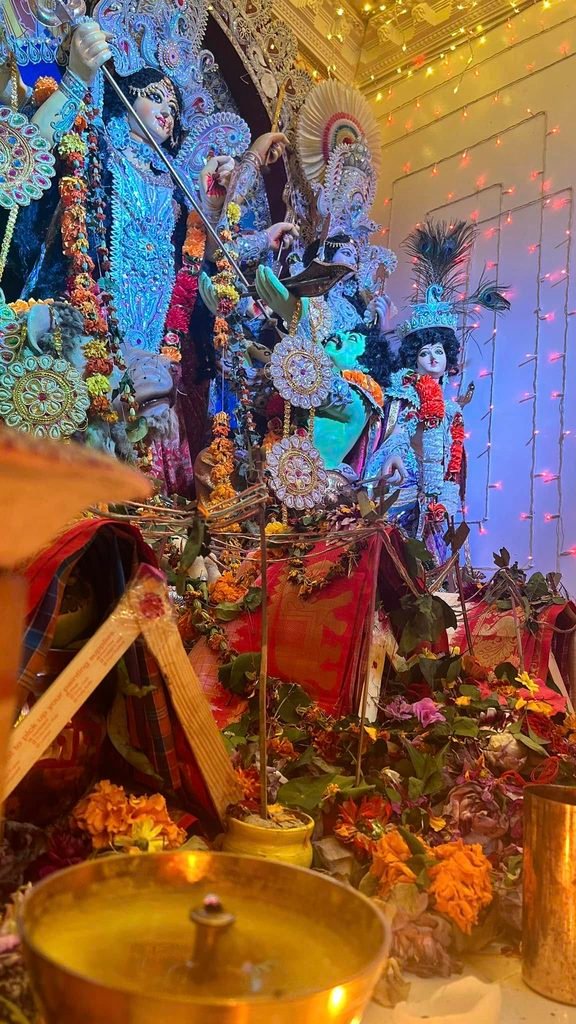
Address: 32A Debendra Mullick Road, Kolkata – 700073. Central Metro is the nearest practical metro, only around 200 metres away, followed by a short walk; with Mahakaran (0.8 km) and Chandni Chowk (0.9 km) as the next options. The lane is just opposite Medical College; go straight to the end, the house is on the right, and the entrance is to the right of the building.
Special Features: Durga here is an Abhaya Murti with only two hands, no Asur, and two lions instead of one. The family follows Vaishnavism, so there is no animal sacrifice, and Lord Narayan is worshipped along with Durga. Ramakrishna Paramhansa visited the thakurdalan, and a plaque outside records it.
History: Purna Chandra Dhar came from Halisahar and traded in salt. He was also a cashier at the British firm Jardine and Skinner. The family reached Kolkata in the 1850s. The building was ransacked in the 1946 riots, and the family had to seek shelter elsewhere.
33. Narasingha Daw Bari
Starting year: 1859
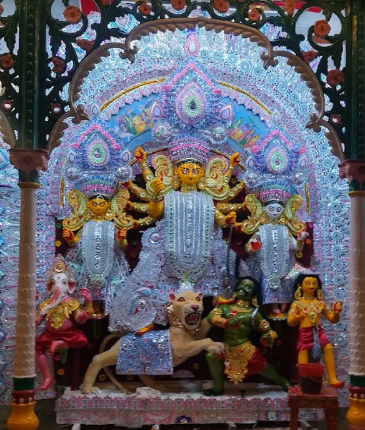
Address: 20 Vivekananda Road, Kolkata – 700006. Girish Park Metro is the practical metro route, followed by a short auto or walk along Vivekananda Road.
Special Features: This is famously the gunmakers’ Puja. A 17-inch cannon made by Winchester Repeating Arms Company is fired at Sandhi Puja and arati. On Dashami, before immersion, the family gives the goddess a gun salute. Pictures of guns, pistols and rifles hang in the thakurdalan, which is lit with chandeliers during the Puja.
History: The Daws came from Kotulpur in Bankura and began in the spice trade. Narasingha Chandra Daw is credited with starting the gun business in 1835. The Puja began in 1859 and is credited to Nandalal Daw.
34. Adharlal Sen Bari
Starting year: 1859

Address: 97A and 97B Beniatola Street, Kolkata – 700005. Girish Park Metro is a convenient metro option, followed by an auto or walk through the Beniatola lanes.
Special Features: Sri Ramakrishna visited the house during the Puja in 1883 and 1884, and a plaque at 97B describes it as the house of his disciple Adhar Lal Sen. The family follows Vaishnavism and eats vegetarian food until Nabami, with fish only on Dashami. The Puja is now held in two houses, with Baro Taraf at 97B, called “Adharalaya”, and Choto Taraf at 97A.
History: Ramgopal Sen began the Puja in 1859. His son Adhar Lal Sen became a Deputy Magistrate at 24 and joined Calcutta University’s faculty in 1884. He wrote poetry and died young, before turning 30.
35. Chorbagan Chatterjee Bari
Starting year: 1860
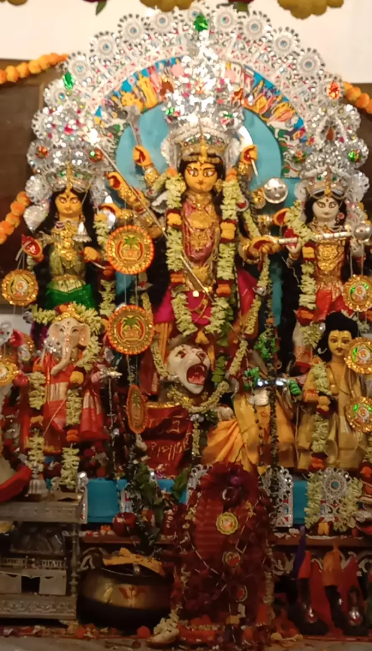
Address: 120 Muktaram Babu Street, Kolkata – 700007. Mahatma Gandhi Road Metro is the nearest practical metro route, followed by a short walk or auto. Enter Muktaram Babu Street from Central Avenue near Ram Mandir; the house is midway on the right.
Special Features: Fish is the signature of this Puja: it is offered as bhog from Saptami to Dashami. The idols are dressed in Benarasi sarees and heavy gold ornaments. A cloth on the lion carries Ram Chandra Chatterjee’s name. The men of the family prepare the bhog, and a natmandir behind the thakurdalan once staged theatre during the Puja.
History: The family came from Khulna, and Ram Chandra Chatterjee began the Puja at his Muktaram Babu Street house. Ram Chatterjee was a stevedore by profession. The house is known as Ram Chandra Bhawan.
36. Maniktala Saha Bari
Starting year: About 150 years old
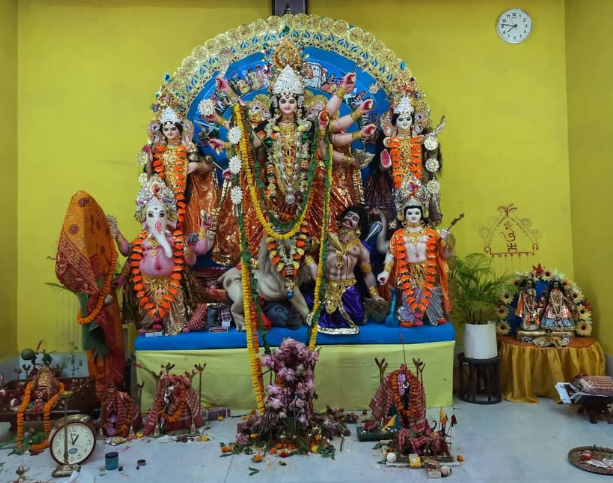
Address: 122A Maniktala Street, Kolkata – 700006. Shyambazar Metro is a practical metro option, followed by an auto towards Maniktala. Local buses along A.P.C. Road and Maniktala Main Road provide the road alternative. Driving from Girish Park towards Maniktala, Maniktala Street branches off to the left beside Swami Vivekananda’s statue, before Raja Rammohan Sarani on the right.
Special Features: The white mansion stands at the junction of Vivekananda Road and Maniktala Street, with a huge courtyard and a well-decorated thakurdalan. Two white stone lions guard the entrance to the thakurdalan.
History: The Sahas came originally from Allahabad and made a fortune in the salt trade, with large zamindari holdings across Kolkata. The Puja is nearly 150 years old.
37. Motilal Seal Bari
Starting year: More than 150 years old

Address: 60 Colootola Street, also known as Maulana Shaukat Ali Street, Kolkata – 700073. Central Metro is the convenient metro option, followed by a short walk or auto.
Special Features: The house keeps traces of colonial-era architecture. On Saptami morning the nabapatrika is bathed at Seal Ghat, and married women perform dhuno porano.
History: Motilal Seal was one of Calcutta’s richest businessmen and is remembered for his philanthropy. His obituary in the Hindu Intelligence called him the richest and most virtuous Baboo of Calcutta. He supported widow remarriage, and is said to have paid Rs 20,000 to the first man who married a widow. He backed the Hindu Charitable Institution and the Hindu Metropolitan College, and a street, a ghat and a ward of Medical College carry his name.
38. Chandra Family
Starting year: 1877
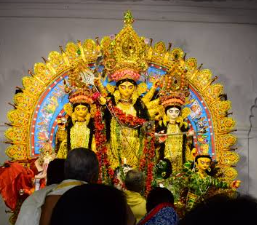
Address: 23 Nirmal Chandra Street, Kolkata – 700012. Esplanade Metro is a practical central-Kolkata route, followed by an auto or walk. From the Hind Cinema crossing on Ganesh Chandra Avenue, the house falls on the left on Nirmal Chandra Road as you head towards Bowbazar.
Special Features: The idol is ekchala, and the thakurdalan was designed by the architect Sirish Chandra Chattopadhyay. The family worships as both Vaishnavas and Shaktas.
History: The family came from Nadia, and Bharat Chandra was the first to settle in Kolkata, in 1781. Ganesh Chandra began the Puja in 1877, after building the large thakurdalan; Ganesh Chandra Avenue is named after him.
39. Kundu Bari
Starting year: 1879
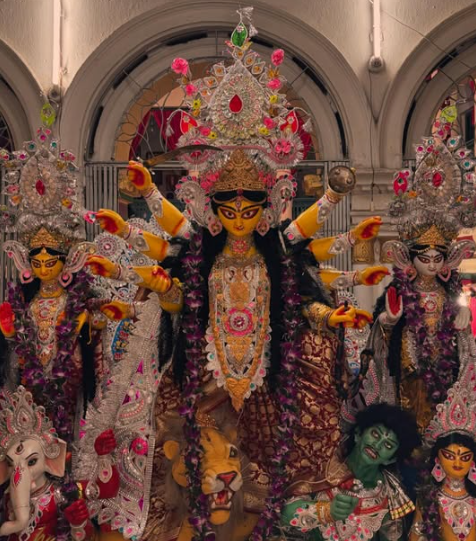
Address: 9 Peary Mohan Pal Lane, Kolkata – 700007. Mahatma Gandhi Road or Central Metro can be used, followed by an auto or walk into the lane.
Special Features: The thakurdalan is known for its stucco work. Dhuno porano takes place on Ashtami. For most of the year the hall sits quiet, even stacked with cardboard boxes, and it changes completely when the Puja arrives.
History: Krishna Das Kundu began the Puja in 1879 at the wish of his wife Rajomoni Dasi, who had always seen Durga Puja in her parents’ house. He made his money as a kerosene dealer and was known as “Kerosene Kundu”. His sons Durlabh and Sudhir, nicknamed Buddhu and Suddhu, carried the Puja on, and both were known for their tarja songs.
40. Balaram Dey Street Dutta Bari
Starting year: 1882
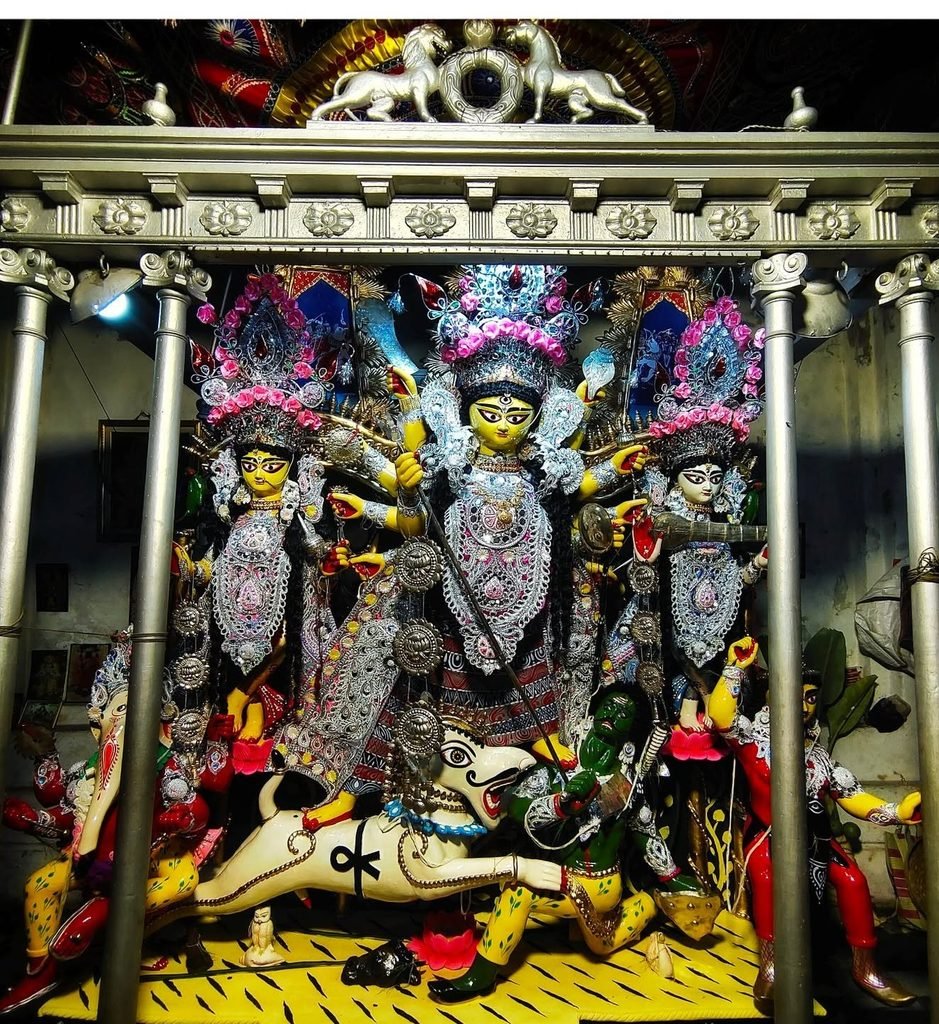
Address: 159 Balaram Dey Street, Kolkata – 700006. Girish Park Metro is a practical metro route, followed by an auto or walk along Balaram Dey Street. The street begins just after Girish Park Metro as you walk towards Sovabazar, on the left.
Special Features: At immersion, family members carry the idol on bamboos on their shoulders rather than loading it on a truck. The chalchitra is attached to three bamboos, following family custom. Kumari Puja is held on all three days, and the women perform dhuno porano. Sandhi Puja and the Dashami baran are among the highlights for visitors.
History: Shyamal Dhon Dutta, a High Court solicitor from the Haatkhola Dutta family, began the Puja in 1882. The sixth generation of the family carries it on.
41. Dutta Family, Hidaram Banerjee Lane
Starting year: 1883
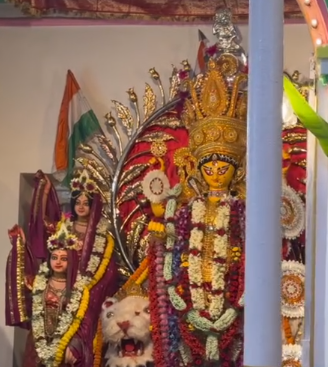
Address: 62 Hidaram Banerjee Lane, Kolkata – 700012. Esplanade Metro is a convenient central route, followed by auto or walking into the Bowbazar lanes. Nnear the Bowbazar crossing, the narrow Hidaram Banerjee Lane opens on the right amid a bazaar, and the Dutta house falls on the left.
Special Features: Durga sits with Shiva on the same platform, in the Hara Gouri form, with no lion and no Mahishasur. She has two hands in Abhaya mudra rather than ten. The thakurdalan stands on a raised platform with a flight of stairs.
History: Gobinda Chandra Dutta, a businessman who dealt in Belgian glass, began the Puja in 1883.
42. Patuatola Banerjee Bari
Starting year: 1890
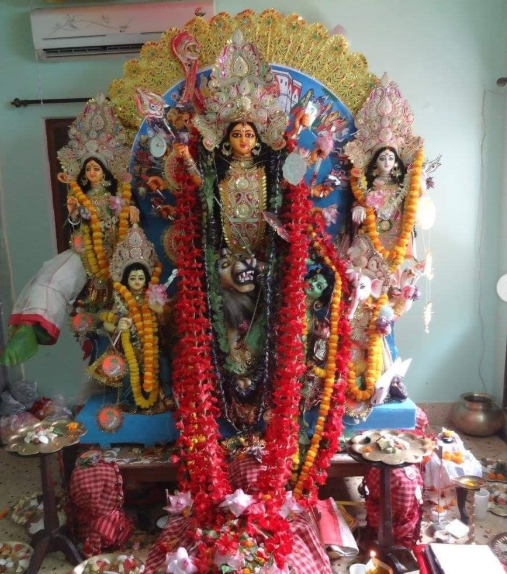
Address: 8 Patuatola Lane, Kolkata – 700009. Mahatma Gandhi Road Metro is the practical metro option, followed by a walk or short auto ride. The Patuatola area is also accessible from College Street by local bus and auto. Coming from Sealdah, cross Amherst Street and continue along Surya Sen Street; Patuatola Lane falls on the right, and the two-storey mansion stands at the end.
Special Features: The bhog is striking: 108 mounds of sugar topped with narkol naru, set symmetrically on large brass plates. The women of the house prepare it. Many household members take part in the rituals, including nabapatrika and Sandhi Puja. In earlier days a music conference was held with musicians such as Raichand Boral, Badal Khan, Girija Shankar Chakraborty and Bhismadev Chattopadhyay, and the tradition continues on a smaller scale.
History: Beni Madhab Banerjee, the first Indian attorney, started the Puja. He was a partner with Henry Owen in the firm Owen and Banerjee, and acted for Rani Rashmoni and Chhatu-Latu Babu. He died at 32, leaving his wife and two infant sons a large estate.
43. Nilmani Dey Thakurbari
Starting year: 1896

Address: 45 Hidaram Banerjee Lane, Kolkata – 700012. Esplanade Metro is a convenient metro starting point, followed by an auto or walk into the central Kolkata lanes. Walk along Hidaram Banerjee Lane from the Bowbazar crossing; the house is on the left.
Special Features: The worship follows Vaishnav style, and a trust meets the expenses. Believe the idol is Kashthi Pathar (touchstone) Durga, or ashtadhatu, made of eight metals.
History: The family belonged to the group of Saptagram traders who relocated to Calcutta. Nilmani Dey lost his father young, grew up at his maternal uncle’s house, worked as a clerk in a British firm and then built his own business. After a divine dream, he built a Lakshmi Narayan temple in 1896 on land next to his house and later began worshipping a Durga image.
44. Amrita Lal Dawn Bari
Starting year: More than 120 years old
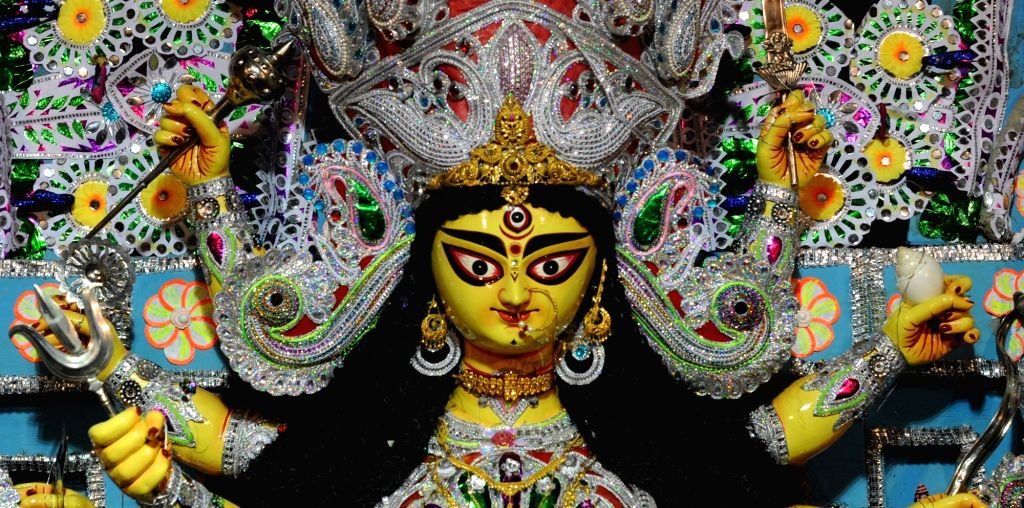
Address: 8 Dinu Rakshit Lane, Kolkata – 700005. Girish Park or Shobhabazar Sutanuti Metro can be used depending on the route, followed by an auto or walk into the lane. The lane is easy to miss; it lies off Beniatola Street, just after a Barowari Puja at the street’s entrance, and a local guide is helpful.
Special Features: The Durga dalan and house were recently renovated, with glass paintings inside the thakurdalan and mina work over the entrance. Dhuno porano is performed on Ashtami. The family worships Narayan as a Shaligram stone, which is dressed in a dhoti. Jagaddhatri is the family’s main Puja, and Kali Puja is celebrated as well.
History: Amrita Lal Dawn started the Puja after making his fortune as a dealer in petrol, diesel and kerosene. The family originally came from Bankura.
45. Bholanath Dutta Bari – Bholanath Dham
Starting year: 1905 at the family’s Varanasi ashram
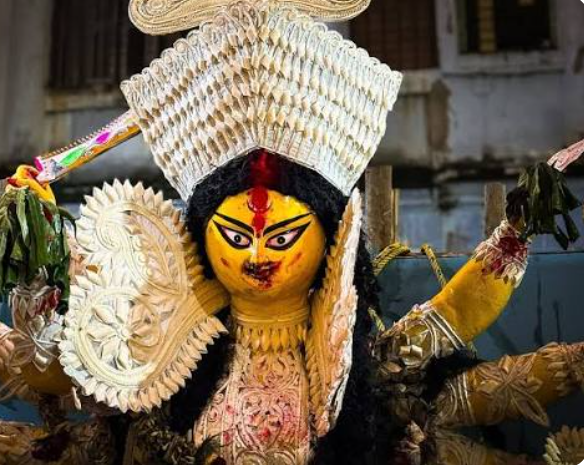
Address: Bholanath Dham, 33/2 Beadon Street (Abhedananda Road), Kolkata – 700006. Girish Park Metro is the easiest metro route, followed by a short walk or auto. From Chhatu Babu-Latu Babu’s house it is a straight drive along Beadon Street; the house is on the left, near where Abhedananda Road meets the Maniktala crossing.
Special Features: Durga is worshipped as Shiva-samanwita Durga, sitting on Shiva’s lap with no weapons, no lion and no demon. She has two hands, showing Abhaya and Varada mudras, and the form is known as Hara Gouri. Kumari Puja is held on Ashtami, and the women perform dhuno porano. The house is also known for flying fanus lanterns at Kali Puja and Diwali.
History: Bholanath Dutta began the Shiva Durga Puja in 1905 at Bholanath Ashram in Varanasi. His sons continued it after his death, and it moved to Sovabazar and finally to Beadon Street. The family belongs to the Kulin Gandhabanik clan, and the image is said to have been visualised by the legendary merchant Dhanapati Saudagar.
46. Nilmoni Dutta Bari
Starting year: About 1909
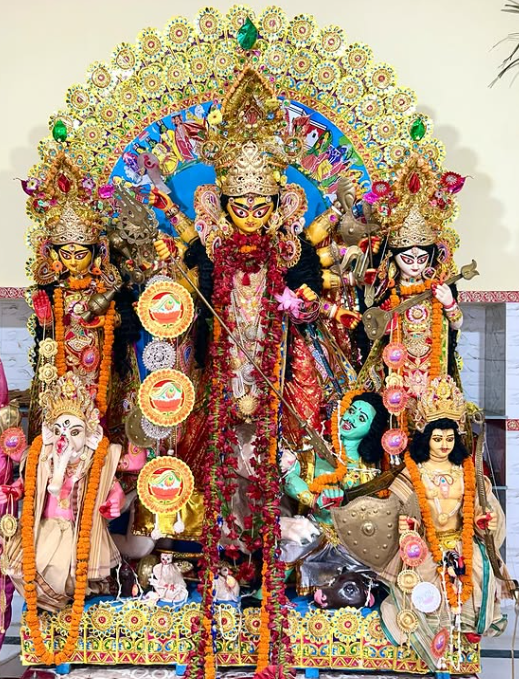
Address: 56A Doctor’s Lane, Kolkata – 700014. Sealdah Metro is the most practical metro starting point for this area, followed by an auto or local transport. Puran Chandra Nahar Lane starts opposite Union Chapel and narrows into Doctor’s Lane; the pink Dutta house is on your left.
Special Features: The thakurdalan has a single arch, and the Durga idol is ekchala. The family also celebrates Jagaddhatri Puja.
History: Nilmoni Dutta began this modest family Puja around 115 years before.
47. Mahendra Sreemany Bari
Starting year: About a hundred years old
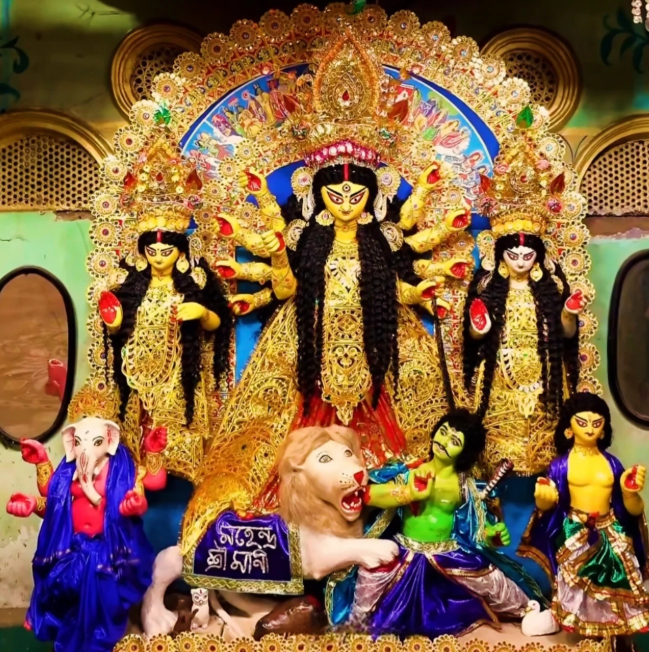
Address: 17 Mahendra Sreemany Street (Sukea Street), Kolkata – 700009, near A.P.C. Road. Shyambazar or Girish Park Metro can be used, followed by an auto or walk towards Sukea Street and Mahendra Sreemany Street. The street is opposite Ram Mohan Library, at the junction of Ram Mohan Roy Road and A.P.C. Road.
Special Features: The thakurdalan holds a bust of Mahendra Sreemany. The idol is traditional, with gorgeous daker saaj. Sukea Street is named after the Armenian merchant Peter Sukeas, and the ancestral homes of Raja Rammohan Roy, Vidyasagar and Satyajit Ray lie within a stone’s throw.
History: Mahendra Sreemany was a wealthy zamindar who settled here in the late 19th century and was also a social worker.
48. Nilmani Sen Family
Starting year: About 100 years old
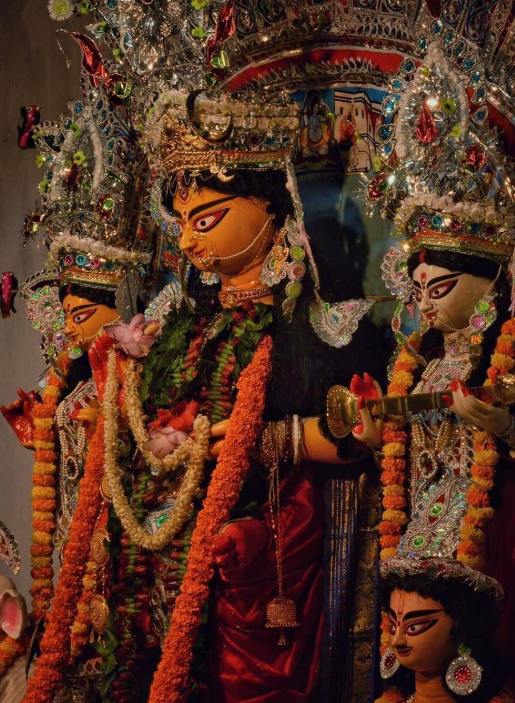
Address: 130 Baithak Khana Road, Kolkata – 700009. Mahatma Gandhi Road Metro is the practical metro option, followed by an auto or walk towards Baithak Khana Road.
Special Features: Durga is an Abhaya Murti with three eyes and two hands, one in Abhaya mudra and one in Varada mudra, seated on a lotus throne. The three-arched thakurdalan is whitewashed, which hides its fine details. At Sandhi Puja, 108 lamps are lit. The family follows an old ritual called raktadan, now performed symbolically by offering blood from a small cut on the chest onto bael leaves and hibiscus.
History: Nilmani Sen was a gold merchant who came to Calcutta from Jessore in the early 19th century and lived at Jakeria Street, where he first held the Puja. His grandson Kanailal Sen acquired a house with a thakurdalan at Baithak Khana Road, and the Puja has been held there since 1913.
49. Shambhunath Sen Bari
Starting year: Over 100 years old
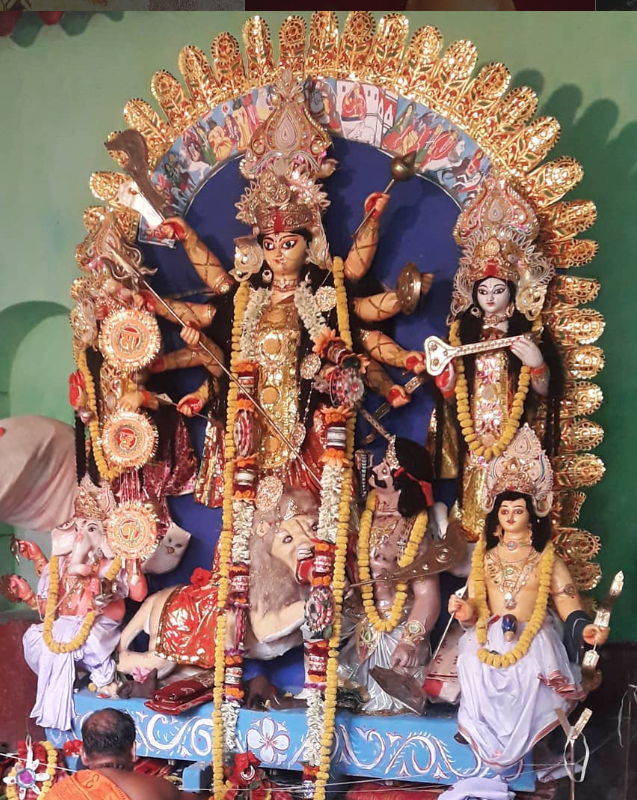
Address: 3 Rammohan Ray Sarani (Amherst Street), Kolkata – 700009, beside Lady Dufferin Hospital. Mahatma Gandhi Road Metro is the practical metro route, followed by an auto or walk.
Special Features: You can see the idol straight from the road. It is made as an ekchala to suit the design of the house.
History: Shambhunath Sen came from Saptagram and worked as a sales commission agent with G. Arthurton & Co., which imported Sunlight, Pears and Lux from Lever Brothers. Later the firm also imported Cherry Blossom shoe polish and Horlicks. He bought the land for the present residence in 1906 for Rupees 9,000 and built the house in 1909. The family is distantly related to the 18th-century Gouri Sen.
50. Bhawanipur Mallick Bari
Starting year: 1924
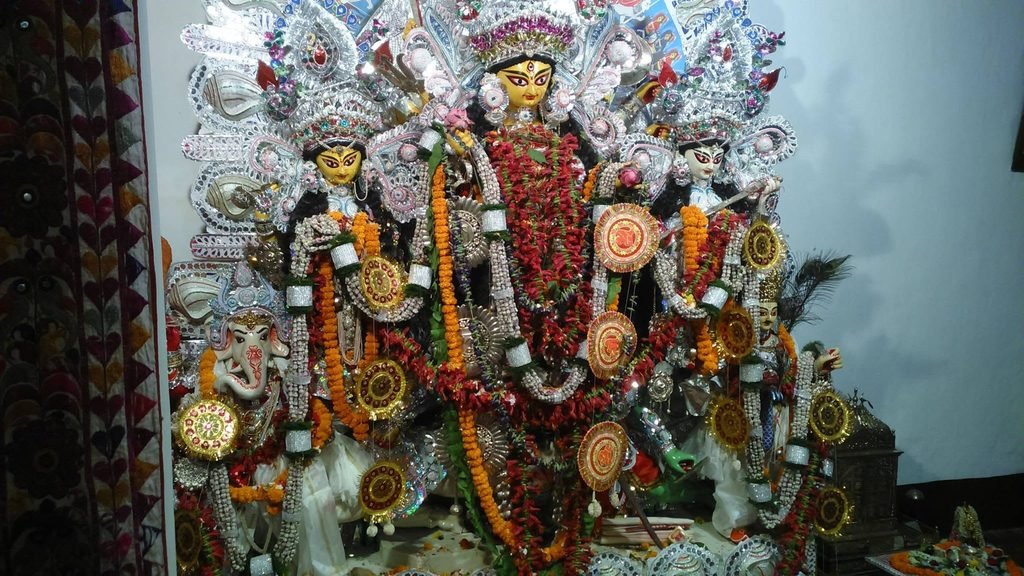
Address: Mohini Mohan Road, Bhawanipur, Kolkata – 700020, at the Mallick family residence (25A, C, Mohini Mohan Road, Jadubabur Bazar). The most practical metro approach is through Jatin Das Park or Rabindra Sarobar, followed by an auto or local road transport depending on the exact family-house location. Near Netaji Bhawan Metro Station; take the lane just before Jadubabur Bazar, which is Mohini Mohan Road, and the Mallick house is inside a small entrance on the left.
Special Features: Rituals are performed in two places, the Annapurna Dalan and the Durga Dalan. The family follows Vaishnav practice, so there is no animal sacrifice. They eat vegetarian food from Sashthi to Nabami and take non-vegetarian food after Dashami immersion. No rice is offered to the goddess, only wheat preparations. Chandipath marks the start of the Puja on Mahalaya, and the goddess is decorated in daker saaj.
History: Radha Gobinda Mallick began the Puja when the family lived at Guptipara, and his son Surendra Madhab Mallick revived it in Kolkata after a gap, a joint effort of seven brothers. The family came from Srikhanda before moving to Guptipara. Radha Gobinda settled in Bhowanipur in 1860.
When Durga Leaves, Kolkata Keeps the Story
By the time the last dhaak begins to soften, the white kaash, or kans grass, has already begun to sway along the edges of Bengal. Its feathery white flowers have long been part of the visual memory of autumn and Durga Puja, appearing in fields just as the festival draws near.
For a few days, Kolkata’s old houses seem to breathe differently. Courtyards that remain quiet for most of the year fill with footsteps, conch shells, incense, ululation and the deep, familiar rhythm of the dhaak. A thakurdalan that sits half-forgotten under cardboard boxes for months changes completely when the Puja arrives. In one house, a centuries-old idol waits beneath an old thakurdalan. In another, a particular bhog is prepared exactly as earlier generations prepared it. Somewhere else, a family carries its goddess towards the river on its own shoulders, following a ritual that has outlived the people who first began it.
And when the goddess leaves, the houses do not become ordinary again.
The flowers fade. The lights come down. The dhaak falls silent. But the story remains in the walls, in the courtyard, in the old wooden doors and in the memories of the families who will begin preparing again long before the next autumn arrives.
These 50 Pujas are only part of that story. Kolkata has many more family traditions waiting behind its old gates, including the Bhawanipur Mitra Bari, whose Puja is said to go back to 1757, the Bhowanipore De Bari, whose Mahishasur wears a coat and boots, the Deb Burman Raj Rajeshwari Puja at Italgacha, and the Blue Durga of the Kali Mohan Ghosh Ray family. There is also the Manmotho Nath Ghosh family of Pathuriaghata, known for its patronage of classical music.
Each has its own beginning, its own rituals and its own way of welcoming Durga home.
Perhaps that is what makes Kolkata’s Bonedi Bari Pujas so enduring. They are not simply celebrations preserved from the past. They are living family histories, renewed every autumn.
And when the next season arrives, when the first white kaash flowers appear and the distant sound of the dhaak returns, the old doors will open once again.
Durga will come home.
And Kolkata will remember.