3 October 2026 | 7 min read
People Pen Desk
Walk into Kumartuli in July and you will find potters already making idols that won’t be worshipped for months. Across the city, committees are looking for sponsors, shops are ordering new stock, and the police are planning how to manage traffic. The festival itself lasts five days. But Kolkata’s real Durga Puja season starts six months earlier.
The Season That Starts in July
July in Kolkata is hot and humid. Most people think about staying cool, not about Durga Puja which happens in September or October. But in Kumartuli, a neighbourhood in North Kolkata, something important is already happening.
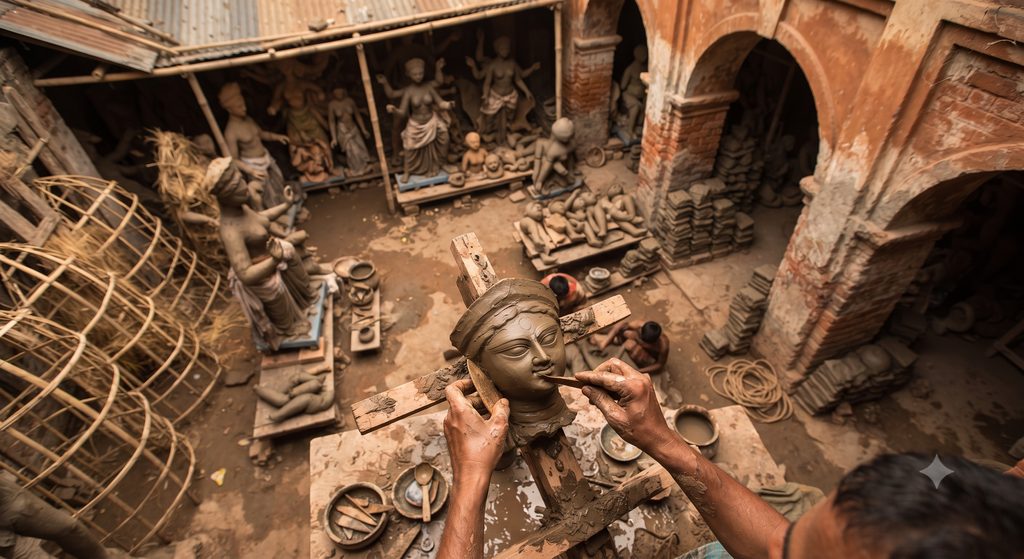
Kumartuli is where potters make idols. About 400 potter families live and work in Kumartuli. In July, these potters are already shaping wet clay. They are making gods and goddesses that won’t be installed in pandals for another three months.
The potters follow a different calendar than everyone else. Their year starts in February or March when puja committees order idols. Their year ends in February next year when they finish making idols for Saraswati Puja. For Durga Puja, the work gets busiest from August to October. But the real work the shaping and carving starts much earlier.
Making an Idol Takes Six Months
A potter’s workshop in Kumartuli is not a place where things happen fast. The craftspeople work slowly and carefully. They know their deadlines are fixed. They cannot rush. A big idol takes six months or more to make. It depends on what the puja committee orders and how detailed they want it to be.
Here is how the process works: A potter gets an order in January or February. He needs to deliver the idol by late September or early October. First, he sketches the design. Then he builds a wooden frame. Next, he applies clay layer by layer. Each layer must dry for three or four days before he adds more clay. Then comes carving, then painting, then adding gold and ornaments. Only after all this is done can he pack the idol and deliver it.
Large workshops get many orders at the same time. All orders have the same deadline: the week before the festival starts. Some senior potters receive orders a full year in advance. They are always working on next year’s idols while this year’s festival is happening.
Committees Start Planning in May
Kumartuli’s potters are just one small part of the whole system. In Kolkata, about 3,000 puja committees exist. Each committee is like a small business. They need money, plans, and organization. These committees do not appear in October. They start real work in May and June.
In May and June, committees decide on sponsorship, design themes, hire designers, and get permission from police.
Sponsorship is the biggest issue. Big pujas cannot happen without it. A committee does not have enough money from community donations. They need companies to sponsor them. Companies make decisions based on money and profit. They need time to decide. They want good visibility. They need advance notice.
So committees start asking for money in May and June. Companies decide in July and August. When money comes late, committees have problems. They have to plan faster. They have to build the pandal in less time. Sometimes they cut costs and corners. This is why early planning matters so much.
Pandals Go Up in August and September
By August, Kolkata starts to change visibly. Bamboo poles appear on streets that looked normal just weeks before. Temporary structures called pandals start taking shape. Some big pandals take three months to build. Others are built in three weeks. The difference is simple: If sponsorship arrives on time, committees can hire professional designers. If sponsorship is late, they use volunteers and work faster.
Kolkata gets about 2,500 pandals during these two months. Streets become construction sites. Traffic changes. Quiet neighbourhoods suddenly have many workers and trucks. The electricity company watches carefully because more power will be needed.
Government Agencies Prepare Too
Government does not wait. By August, the West Bengal government tells municipalities to fix roads. In 2026, the government said: “Fix all damaged roads by October 10.” This seems simple but requires planning. Municipalities must find bad roads, get money, hire workers, and finish before crowds come.
In early September, Kolkata Police meet with puja committees. They plan traffic routes, discuss crowd control, and arrange where idols will be taken into water after worship. These meetings happen three weeks before the festival starts. This gives committees time to change their plans if police say no.
The electricity company talks to pandal builders about how much power each pandal needs. Hospitals get more staff ready. The sanitation department plans for the garbage that will be created.
None of this happens by chance. All of it needs advance planning and coordination.
Shops Prepare Their Inventory
For shop owners and street vendors, August is when a big selling season starts. Kolkata’s shopping areas New Market, Gariahat, Hatibagan, and shopping malls are not just places. They are businesses that plan ahead. Shop owners extend their hours in August. They know pre-Puja shopping will bring much of their yearly income.
But planning starts even earlier. Buyers go to other cities in June and July to order clothes, jewellery, beauty products, and household items. They cannot wait until August to order. Durga Puja is the second-biggest shopping season in Kolkata after winter holidays. For 210,000 street vendors in Kolkata, this season means survival. The money they earn in these five days keeps them going for months. They cannot afford to be unprepared.
Tourism Changed Everything in 2021
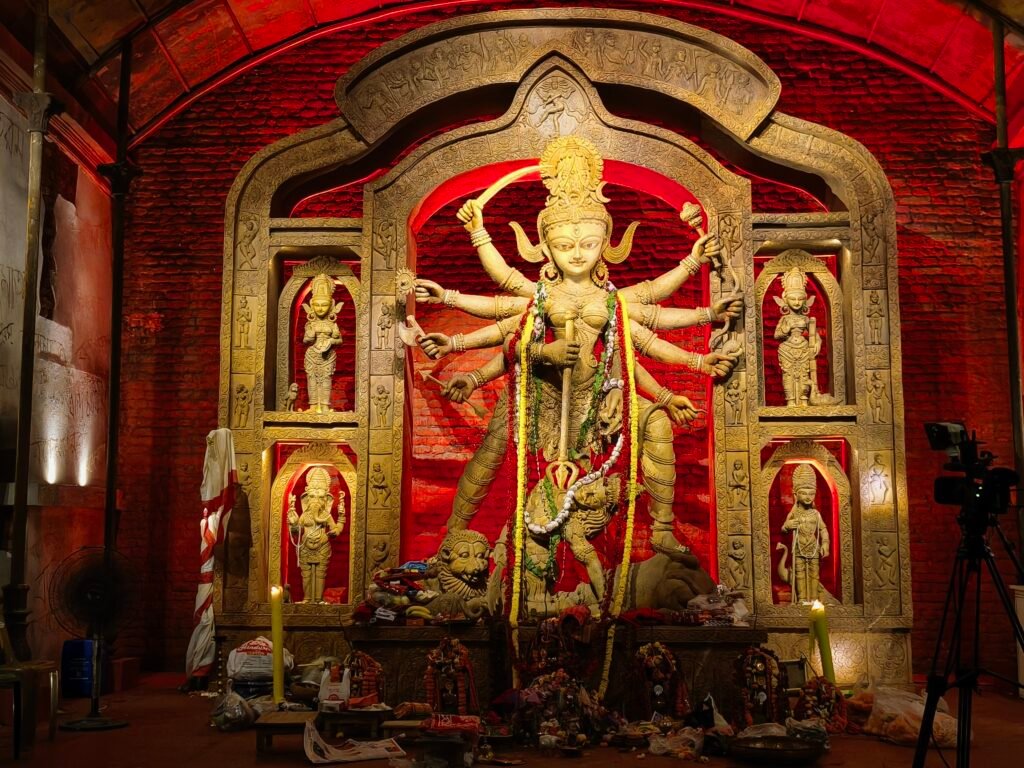
Kolkata’s Durga Puja entered a new phase in December 2021. UNESCO added it to the list of Intangible Cultural Heritage of Humanity. Kolkata’s Durga Puja was the first festival in Asia to get this honour. This changed everything about how the festival is organized.
The numbers show the change clearly. In 2022-23, Kolkata had 27 lakh foreign visitors during Durga Puja. Next year it was 32 lakh. In 2024-25, it became 39 lakh, a 20 per cent increase in one year. These are big numbers. Hotels book all their rooms by July. Travel companies start selling Durga Puja packages in May. Airlines add extra flights. Restaurants hire more staff and plan menus for international visitors.
Because of tourism, preparation started earlier. What was a local event became an international event. Now tour operators watch bookings from June onwards. Committees must announce their themes and designs early to attract visitors.
The Festival Has Deep Roots
Understanding why Kolkata does all this preparation requires looking at history. The first Durga Puja in Kolkata happened in the 17th century. It was a ritual for rich royal families. For centuries, only wealthy people celebrated it.
In 1910, the first public Durga Puja happened at Balaram Basu Ghat Road. This changed everything. From a private celebration, it became a public celebration. After 1910, more and more communities started their own pujas. The festival grew bigger and bigger.
Today, West Bengal has about 43,000 Durga Pujas in all communities and neighbourhoods. This scale means the festival is important for the whole region culturally and economically. The preparation cycle controls the city’s calendar from June to October for hundreds of thousands of people.

Why Six Months Is Necessary
When you look at all the different timelines, it makes sense why six months is needed. Idol makers work from February. Committees plan in May and June. Sponsorship decisions come in July and August. Pandal construction gets busy in August. Police meetings happen in early September. Tourism promotion starts in July. Shops prepare all summer.
This is not wasted time. Each step depends on the step before. You cannot build a pandal without sponsorship. You cannot get sponsorship without a design. You cannot deliver idols if potters did not finish them. You cannot manage crowds if police did not plan routes.
So preparation must start early. In July, when most people are not thinking about Durga Puja, everything is actually happening. In August, decisions move through the whole system. In September, the city visibly changes. In October, everything comes together in five days.
The Work Nobody Sees
What visitors see as spontaneous celebration is actually six months of work. Go to Kumartuli any time from February to September and see potters working. Go to a committee office in July and find organizers at desks with papers and phones. Go to Gariahat in early September and see vendors putting new items on shelves. Drive through the city in late August and see streets blocked for construction.
This is not excitement or laziness. This is organized work spread across thousands of workshops, committees, shops, and government offices. The cycle starts early because it has to. Kolkata does not wake up for Durga Puja in October. Kolkata emerges gradually from six months of careful, connected work. This work starts in the quiet summer season when most people are just trying to stay cool.