
29 September, 2026 | 7 min read
Soumya Ranjan Bihara
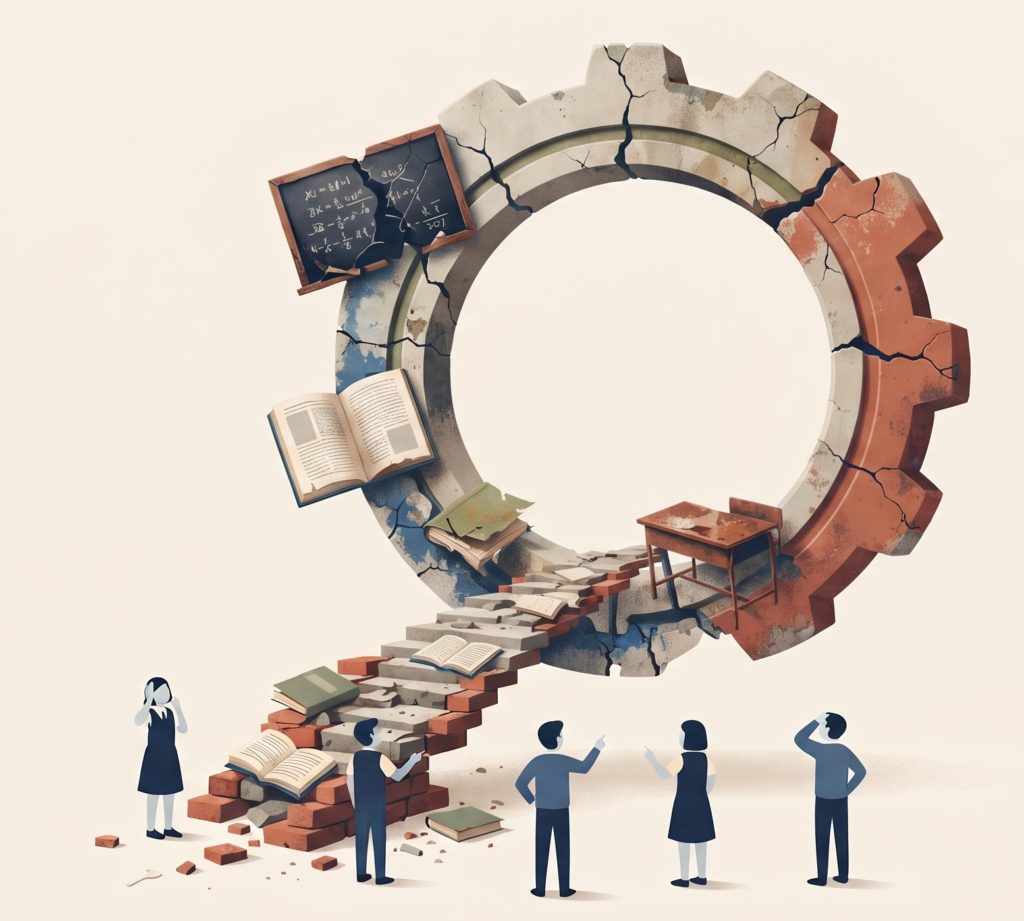
The situation is slipping out of control. If corrective steps are not taken immediately, the hard-earned reputation of the IIMC may suffer irreparable damage. It is time to acknowledge the educational crisis and act decisively.
The need for quality education is greater today. In the age of artificial intelligence, it is difficult to function meaningfully without proper education and skill. This is why governments worldwide, including India, regularly frame and revise education policies. While India aspires to become “Vishwaguru” serious questions are being raised about whether this goal can be achieved in reality. The reason is clear. Corruption, negligence, and unethical practices by some officials and teachers are pushing the education system into crisis.
A disturbing example of this crisis can be seen at the Indian Institute of Mass Communication (IIMC) Dhenkanal. The IIMC holds a respected place in journalism and mass communication education. It has a strong legacy, and thousands of its alumni work in media houses, government organisations and corporate institutions in India and overseas. Sadly, over the past few months, the image and credibility of the IIMC Dhenkanal have been repeatedly questioned due to the actions of a few individuals. Those holding high positions and drawing salaries from public money appear to have forgotten their responsibility towards education and the nation.
A recent incident clearly reflects this problem. A notification was issued for the recruitment of five posts in “CRUT- Capital Region Urban Transport,” a public transit agency. These posts were related to mass communication and were filled through a third-party agency. The information was shared by the current Regional Director of IIMC Dhenkanal in the official WhatsApp groups of various IIMC batches. While sharing job information with students is welcome, what followed was highly questionable.
Along with the notification, two email IDs were mentioned for submitting applications. One belonged to an official of the third-party agency, while the other was the personal email ID of the Regional Director. This raises serious questions. How can a senior government official receive and process CVs for recruitment conducted by a private agency? This creates a clear conflict of interest and violates the Central Civil Services (Conduct) Rules of 1964 (Updated). Rule 15 explicitly states that government servants must not influence appointments or recruitment processes. Violating this rule attracts punishment. However, such actions appear to be taken lightly by the authorities.
I have been associated with the IIMC Dhenkanal for nearly 15 years, first as a student and later as a faculty member. When I was a student in 2010, the then Regional Director clearly told us that IIMC’s role in campus placements was limited. The IIMC only facilitated opportunities, and media organizations conducted their own interviews and made independent selections. The same practice continued when I joined as a faculty member in 2016. This transparent system ensures fairness and credibility of the results.
However, the current situation is different from that. There is a visible division among students. Certain students are given preference and special support, particularly regarding job related matters. This selective approach raises serious ethical concerns and damages the institution’s culture.
Another alarming issue is the declining academic standards. There are allegations that even basic practical training is not delivered effectively. For personal interests, local working journalists are appointed as assistant professors, even when they are simultaneously employed in multiple organizations. A journalist working in five or six places simultaneously cannot remain committed to the teaching. The results were predictable. Students are promoted, their bylines appear in newspapers, and placements are somehow managed, but real learning is missing from the process.
This approach harms students the most. Media organizations may initially hire students based on IIMC’s reputation, but their poor professional skills will soon be exposed. Many students may lose their jobs within a few months of completing their diploma. Over time, this will seriously damage the IIMC’s credibility.
The solution to this problem is straightforward. Qualified and dedicated teachers must be appointed through a transparent process. Therefore, background checks are essential in such cases. If individuals acting as brokers for money are allowed into classrooms, the future of students and the journalism profession will be at risk. The next generation of students will not forgive such negligence.
Higher authorities must also take these issues seriously. The Dhenkanal campus urgently requires academic and administrative reforms. Recruitment for Academic-cum-Teaching Associates in the middle of this academic session, with notifications circulating casually on WhatsApp and social media, reflects poor planning and weak institutional systems in place. Reputed institutions like IITs, IIMs, and IISCs do not function this way because they prioritize academic quality and stability.
Recently, a friend asked me why I did not speak out when I was employed at the IIMC. My answer was simple. I regularly reported irregularities, corruption, and administrative failures in writing to higher authorities. One serious issue from the last academic year deserves to be mentioned. There was credible evidence that some employees were involved in supplying alcohol to hostel students during the 2024-25 session. I formally complained as soon as the evidence was revealed. Unfortunately, the authorities did not respond. Instead, the concerned employees continued to receive support. I believe it is not appropriate to discuss what followed.
The problems at IIMC Dhenkanal are many, and the lack of corrective action is deeply concerning. The purpose of writing this article aims to solve these issues. IIMC belongs to all of us who studied there and built our careers on the foundation it provided. No alumnus would want to see their institution decline because of negligence and unethical practices.
The situation is slipping out of control. If corrective steps are not taken immediately, the hard-earned reputation of the IIMC may suffer irreparable damage. It is time to acknowledge the educational crisis and act decisively.
Saving IIMC and restoring its academic integrity is essential to protect the future of students, journalism, and public trust.
First published on 25 December 2025. Republished by PEOPLE PEN on 29 September 2026.
Read the original post on X
Opinion pieces reflect the views and arguments of their authors. They do not necessarily represent the editorial position of PEOPLE PEN, and publication does not imply endorsement of the views expressed.