28 September 2026 | 6 min read
Soumya Ranjan Bihara
Since childhood, we have been taught that books are our best companions. Even people who cannot read properly respect books. Yet, this is how books are treated in reputed educational institutions of journalism and mass communication.
It is appropriate to begin this article with an incident from many years ago, when I was a high school student, and a scrap collector came to our house to collect old items. As usual, my mother brought out old newspapers, worn-out plastic items, and other unused things. While sorting through the bunch, the scrap collector suddenly picked up a book and handed it to my mother. He said, “Mother, this book was mixed with the newspapers by mistake. Please keep it. It may be useful someday.” That moment has stayed with me. A person who earned his living by collecting waste clearly understood the value of books. Today, it is painful to reflect on how some educated people treat books.
I worked as a teacher at the Indian Institute of Mass Communication Dhenkanal for nearly nine years. From May 2025, a series of actions were taken to force me out of the institution. Among the many reasons, the most prominent was the arbitrary and monopolistic attitude of the management. When I finally left the institution in July, several belongings remained there. These included books on journalism and mass communication, notebooks, diaries, manuscripts, important articles and news clippings, and student assignments. All these were kept in a cupboard and the desk drawer where I used to sit. Unfortunately, the keys to both were missing. Before the start of the 2025-26 academic session, I contacted two staff members and informed them about the missing keys. They assured me that all my books and papers were safe. They said I could collect them later or that they would send them by courier. Months passed. A few days ago, while cleaning my house, my family found two keys that I had lost. I immediately contacted the Regional Director. He said he was unaware of the matter but promised to speak to the concerned staff and ask them to contact me about it. No one did. In the end I had to call one of the employees myself. What he said stunned me.
The employee casually said, “Which books? Oho… Those books? They were garbage, so they were thrown away.” I asked whether only the books were thrown away, or the cupboard and desk too. She replied that the cupboard and desk, along with the books and documents inside them, had been sent to scrap for renovation of the institute.
Since childhood, we have been taught that books are our best companions. Even people who cannot read properly respect books. Yet, this is how books are treated in reputed educational institutions of journalism and mass communication. These books shape careers, build values, and guide students towards responsible citizenship. What is the fault of these books?
To the best of my knowledge, institutions usually follow a proper procedure when disposing of documents. Committees are formed for this purpose, and records are destroyed only after a fixed period, usually around three years, as in the case of examination answer sheets or student assignments.
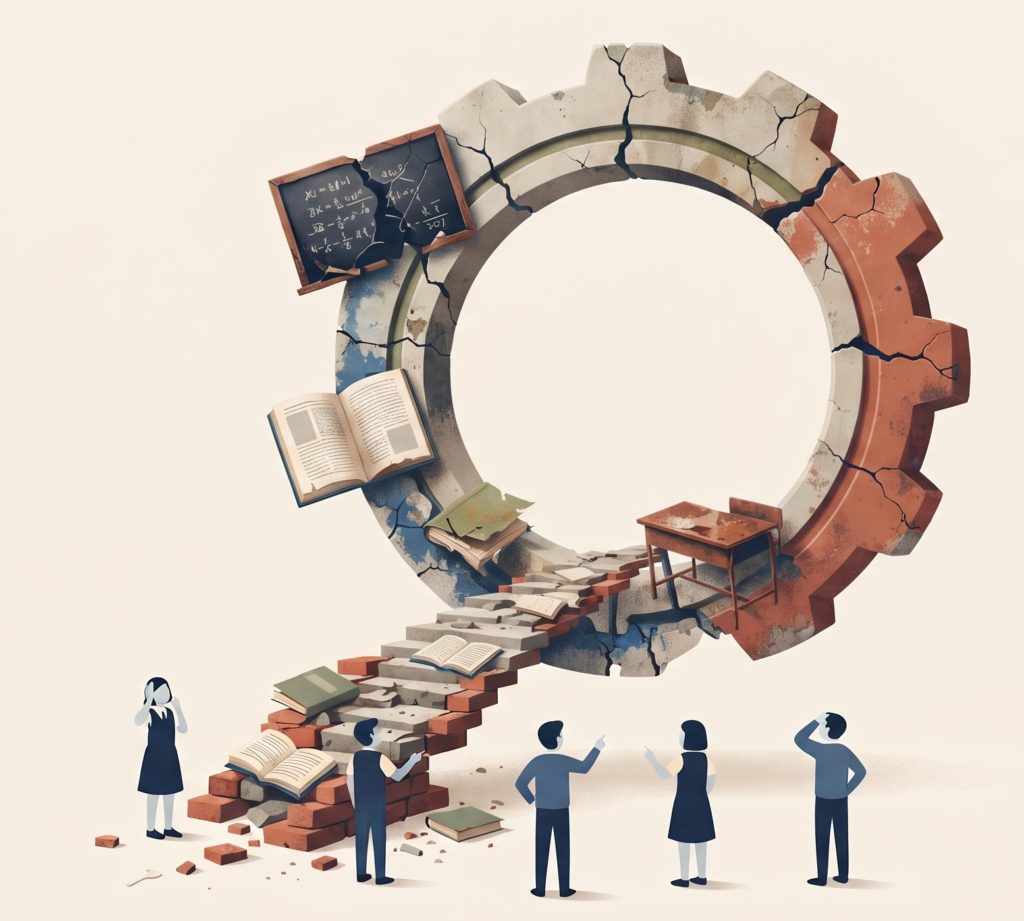
The Indian Institute of Mass Communication is a government institution that has now been granted Deemed to be University status, where such committees consist of educated teaching and non-teaching staff. This raises serious questions about how books related to journalism and mass communication, student assignments, and important documents were disposed of without due process, reflecting a worrying mindset among some individuals who appear educated and respectable but lack basic ethical values. Such practices harm the credibility of institutions and mislead future generations. Instead of addressing real issues, efforts are made to protect personal interests and please higher authorities.
Recently, at the 7th Odisha State Book Festival in Bhubaneswar, I met some former students. During our discussion, they spoke about the declining quality of education at their institution. They told me that some teachers now write articles and columns for students, and these are published under the students’ bylines. I found it hard to believe. If true, this signals a serious decline in academic integrity. An institution once known for its excellence now faces questions about its credibility. And this is at a time when the National Education Policy 2020 speaks of quality education, skill development and practical training. If the standard of education continues to fall, where will students learn and how will they grow? Parents choose an institution for its name and its history. When the reality is different, it is the students who suffer. In such situations, books remain their strongest support. They build knowledge, confidence, and practical understanding of the subject. However, in the digital age, students read less. Journalism and mass communication require deep reading and critical thinking. Without a strong relationship with books, the next generation of journalists cannot perform to their full potential. Let us take a simple pledge to read at least a little every day. If anyone treats books as scrap, let us firmly remind them that books are not waste. They are the foundation of education, ethics, and thoughtful societies.
First published on 15 December 2025. Republished by PEOPLE PEN on 28 September 2026.
Read the original post on X
The views expressed in this opinion piece belong to the author. PEOPLE PEN publishes a range of perspectives and does not necessarily endorse the views, interpretations or claims expressed by contributors.
#OdiaJournalism #JournalismEducation #HigherEducation #IIMC #IIMCDKL #IIMCDhenkanal #MediaEducation #PublicRelations #CorporateCommunication #News #Broadcast #Odisha #BestUniversity #India #Journalism #Journalist #Education